
Document Type : Research Paper
INTRODUCTION
Heat pumps benefit from the implementation of TiO2 nanofluids within nanotechnology because it leads to enhanced heat transfer performance metrics. When TiO2 nanoparticles are added to water-based fluids they boost heat transfer capabilities and thermal conductivity thus leading to better heat exchange system functionalities. The nanofluid system achieves better thermal performance which enables optimized heat transfer operations. Heat pump performance improves notably through the implementation of TiO2 nanofluids because of elevated Coefficient of Performance (COP). A research study indicated that heat pump systems operated better with 0.3% TiO2 concentration that produced superior heat transfer efficiency with optimized thermal property and flow resistance balance [1]. The specific heat transfer optimization occurs with 0.3% TiO2 nanofluid concentration in double-pipe heat exchangers which delivered 23% enhanced performance according to research data without excessive pressure drop consequences [2]. Adult TiO2 nanofluids used in shell and tube heat exchangers result in a substantial boost of thermal performance. Research indicates that when using 0.5% TiO2 concentration in the solution it enhanced the heat transfer coefficient by 12.3% thus proving practical usage in industry [3]. The enhancement of thermal conductivity due to TiO2 nanofluids can find its counterbalance through increased viscosity and pressure drops that result from running concentrated nanofluid systems [4]. Geothermal systems and heat pumps benefit economically when nanofluids are employed because they reduce power usage while making systems more effective. However, the environmental impact and cost of nanoparticle production and disposal need careful consideration [5].
The document reviews how TiO2 nanofluids improve heat pipe thermal performance alongside other nanofluids. Nanofluids demonstrate their ability to decrease thermal resistance while enhancing heat transfer performance effectively. The thermal resistance increases with nanoparticle concentration when the limit is exceeded because high viscosity and particle agglomeration combinations contribute to this effect. Heat transfer performance shows better results due to the improved number of nucleation sites and the high thermal conductivity nature of nanofluids [6]. The research investigates how TiO2-water nanofluid enhances heat transfer characteristics in shell and tube heat exchangers by establishing that TiO2 addition provides superior thermal performance versus pure water. The experimental findings evaluate how the overall heat transfer coefficient changes when using different volume fractions between 0.05% and 0.2% together with temperatures of the hot fluid between 60°C to 80°C. The research findings about nanofluids stay applicable for improving thermal performance within comparable heat-based systems even though heat pumps are not within direct investigation [7].
This paper studies how TiO2 nanofluids improve heat exchange processes and shows anomalous heat characteristics within these solutions. Heat transfer rates become enhanced through base fluid thermal properties and volume concentration improvement by adding nano-sized particles. The optimization achieves crucial importance for energy transformation applications in heat pumps due to their need for efficient heat exchange processes. TiO2 nanofluids demonstrate the potential for heat pump performance enhancement through modifications of Reynolds and Nusselt numbers according to research [8]. Factors such as specific surface area, Brownian motion, interfacial layers, particle clustering, and particle shape all contribute to enhanced heat transfer performance [9].
Fig. 1 shows that conventional heat transfer fluids such as water, thermal oils, and ethylene glycol/water have some limitations because their thermal properties are extremely poor compared to those of nanomaterials. The improvement of the thermal properties of these fluids by adding nanoparticles has led to the development of basic fluids and, consequently, advances in the study of heat transfer fluids.
Heat pumps are important in HVAC systems, particularly in the maritime industry. Marine seawater source heat pumps extract low-grade energy from the ocean to provide heat or cold on ships. These systems require less equipment and can switch between cooling and heating functions easily. Heat pump technology reduces energy consumption, costs, and emissions in the shipping industry. It has also found applications in ground-coupled heat pumps and seawater source heat pumps. Different configurations of heat pump systems have been explored, including capillary tubes and steam jet heat pumps. Nanofluids are engineered colloidal suspensions of nanoparticles dissolved in a base fluid, which have received interest in enhancement of heat transfer properties. They improve the thermal-hydraulic characteristics of heat exchangers (including plate-frame and plate-fin heat exchangers). The heat transfer coefficient of shell and tube heat exchangers can be greatly enhanced using nanofluids. Nanoparticles, like nanodiamonds, have been used to improve the heat transfer capabilities of refrigerants and coolants. The simulation models have been constructed to forecast the behaviours of heat exchanger systems. In general, both heat pumps and nanofluids have potential applications in improving the performance of the HVAC systems in different industries. Further research and development in this field will contribute to sustainable energy practices and improve thermal engineering techniques. A classification of nanofluids based on their properties and applications is illustrated in Fig. 2. See references [1, 3, 10,11].
Heat pumps perform much better with nanofluids, as they improve energy transfer and efficiency. Many researchers have concluded that the use of nanoparticles in heat exchangers improves their performance and this leads to efficient energy transfer. Nanofluids are colloidal suspensions of nanoparticles added to the base fluid. Many previous studies and practical experiments in this field have confirmed the existence of significant improvements in the heat transfer performance in systems when using nanofluids as additives, such as adding copper nanoparticles to the basic fluid in the system, which greatly enhances the heat transfer efficiency by up to more than 30%. Other studies and works have also shown that graphene nanofluids added to systems as additives to system fluids have unique and significantly superior thermophysical properties when compared to other traditional materials used as additives to system fluids. Other studies and experimental works have also shown that other types of nanofluids, such as Al2O3 and TiO2, can be used as additives to system fluids and in turn lead to significant and noticeable improvements in high rates of heat transfer. The effect of nanofluids added to specific heat exchanger systems, such as double-tube and plate heat exchangers, has also been evaluated, showing significant improvements in heat transfer coefficients. The sustainability and thermal performance of ternary nanofluids as an extension of system fluids have also been studied and revealed that irreversibility is significantly reduced and economic feasibility is increased. Nevertheless, more research and practical demonstrations are highly demanded to learn the possibilities and limitations of nanofluids, such as their effects on thermodynamic characteristics, issues concerning the preparation techniques, modelling of thermophysical characteristics, and environmental effects. All in all, nanofluids potentially have a bright future in enhancing the performance of heat pumps with considerably higher efficiencies compared to their traditional counterparts, though they might need to be investigated and researched further. [12, 13].
This study presents an original experimental investigation into the thermodynamic performance enhancement of heat pump systems using TiO2-based nanofluids across systematically varied volume fractions (0.1–5.0 wt%). While previous studies have examined TiO2 nanofluids predominantly in isolated heat exchanger geometries, this work is the first to comprehensively evaluate their direct influence on the Coefficient of Performance (COP) of an integrated heat pump system incorporating a helical microfin tube evaporator. The novelty lies in the simultaneous quantification of heat transfer enhancement, friction factor variation, and COP improvement as a function of nanoparticle loading, thereby establishing a clear performance optimum at 5 wt% TiO2 with a COP gain exceeding 23% relative to the baseline working fluid. Furthermore, the study rigorously characterises the trade-off between thermal conductivity enhancement and viscosity-induced pumping penalties at elevated concentrations, providing a practical operating envelope that has not been previously defined for this specific system configuration. The experimental dataset generated constitutes a validated benchmark for future numerical and optimization studies on nanofluid-assisted heat pump systems. Collectively, these contributions advance the fundamental understanding of TiO2 nanofluid behavior in closed-loop thermal cycles and provide actionable performance data for engineering applications.
Heat pumps constitute a critical technology for achieving energy efficiency targets across the building, industrial process, and refrigeration sectors. The demonstrated COP improvement of over 23% through TiO2 nanofluid adoption translates directly into measurable reductions in electrical energy consumption, operating costs, and carbon emissions for end users. Industries with continuous heating or cooling demands—including food processing, pharmaceutical manufacturing, district energy networks, and HVAC system operators—stand to benefit most significantly from the retrofit or redesign of heat pump circuits incorporating optimised nanofluid formulations. Given the relatively low cost and chemical stability of TiO2 nanoparticles, the approach is commercially viable and scalable without the need for fundamental system redesign. The findings therefore offer thermal engineers and system designers a practical pathway to improve the sustainability and operational efficiency of existing and next-generation heat pump installations.
Solid nanoparticles scattered throughout the base fluid, known as nanofluids, have garnered interest because of their higher heat conductivity than traditional fluids. Temperature and negative processes have an impact on nanofluid characteristics, and the fluid’s composition may alter depending on its intended use. Nanofluids can improve heat transfer performance by increasing the Nusselt number with increasing volume fractions of nanoparticles and boosting the efficiency of microchannels, according to numerous studies. Graphene and titanium dioxide nanofluids have also been studied for their potential to improve heat pump performance. Although more research is required to optimize their design and application for a range of applications, nanofluids provide a feasible way to improve heat transfer in a variety of devices [14].
Solid nanosuspensions in traditional working fluids, or nanofluids, have garnered a lot of interest because of their potential to speed up heat transfer rates. The efficiency of heat exchange processes increases significantly and noticeably when adding nanofluids and distributing the added nanoparticles in the basic fluid in the systems. If compared with conventional fluids, it is found that nanofluids - such as graphene nanofluids added to the fluids of the systems - provide much higher heat transfer efficiency and at high and acceptable rates. Nanofluids have a high ability to significantly improve energy efficiency and sustainability in addition to heat transfer. However, attention must be paid to solving the contamination problems that may occur on the heat transfer surfaces, in addition to the necessity of taking into account the flow range in addition to the properties of the nanoparticles well. To achieve this, there are many researches and studies that have confirmed this, the most important of which are [15-18].
Selecting the right nanoparticles for the job is essential when thinking about adding nanofluids to system fluids to strengthen a heat pump’s performance. In addition to increasing the Reynolds number, this is accomplished by increasing the thermal conductivity. For instance, the diffusion of nanofluids involves dispersing these nanoparticles into the system’s original fluid.
For instance, in the heat recovery loop of a sizable dairy facility, a nanofluid made of water and copper oxide was chosen as the intermediate fluid, increasing heat recovery without requiring further infrastructure. Similarly, in engine cooling systems, nanofluids made of copper oxide, aluminum oxide, and water performed better than water at improving heat transfer with the best pumping power. Additionally, the impact of a copper oxide and water nanofluid on heat transmission in an automobile radiator was investigated experimentally.
Nanofluids can be used to promote heat transmission, but their concentration, thermophysical characteristics (specific heat, viscosity, and thermal conductivity), and operating temperature must all be carefully considered. Additionally, the mass flow rate of the nanofluid in the tubes affects the effectiveness of the heat exchanger. Additionally, a significant influence on the amount of heat transfer increase is the size of the nanoparticles. As nanoparticle size grows, heat transfer rates have been seen to increase until they reach an ideal value. One of the most important factors in choosing nanoparticles added to the basic fluids of the systems is the availability of these materials in addition to their costs, because the cost and availability of these materials are economic matters in the total cost of these systems. In specific applications such as heat exchangers, refrigeration systems, heat pumps, steam power plants, and automotive radiators, researchers and engineers can maximize the use of nanofluids by considering variables such as nanoparticle concentration, thermophysical properties, operating temperature, and cost [19-23].
different ratios of TiO2 nanofluid coolants under controlled conditions to calculate their heat transfer effects in heat exchangers. Several embodiments of TiO2 nanofluid coolants were studied according to the descriptions outlined in the document.
This research examined how TiO2 nanofluids functioned as heat exchange coolants through the analysis of heat transfer rate changes because of different concentration levels oil insid heat pumps. Heat pumps are widely used in many different thermal systems, such as steam power plants, automotive radiators, industrial heat exchangers, and refrigeration systems. However, to solve issues with overheating, the energy crisis, and global warming, they must become more efficient.
In contrast to conventional working fluids, nanofluids stable dispersions of nanoscale particles have the potential to enhance heat transfer, according to earlier studies. This work is concerned with the application of TiO2 nanofluids to increase heat pumps’ capacity for heat transfer.
This study uses TiO2 nanofluids flowing inside a helical microfin tube for its experimental inquiry. Different volume fractions of TiO2 nanoparticles are used to prepare the nanofluids. By comparing the heat pump’s performance with and without the nanofluid, the coefficient of performance (COP) is determined. This concept can also be applied to other thermal systems, thereby saving energy and improving the environment simultaneously.
Many studies have confirmed and proven that the use of nanofluids composed of titanium dioxide leads to a significant and noticeable increase in the performance of these systems when compared to other systems to which no other materials have been added.The improvement of the coefficient of performance is directly and considerably impacted by the volume fraction of titanium dioxide nanoparticles utilized. It was discovered that at the maximum volume fraction of 5%, the heat pump’s performance increases by more than 23%. There is great importance to the results obtained from previous studies in this field, which showed a significant and noticeable improvement and increase in the efficiency of the systems. Other studies showed the importance of focusing on the effects of corrosion and sedimentation of these additives when they operate for long periods.Future research should also focus on the many types of nanofluids and how they affect various technical applications. This work aims to improve the performance of a heat pump by using TiO2 nanofluids. Enhancing heat transmission and energy efficiency is the goal in order to address global issues like the energy crisis and global warming. [24-28]. These results demonstrate the potential advantages of using TiO2 nanofluids in heat pumps and provide encouraging directions for future study and application. The schematic of the heat pump system device used in this study is presented in Fig. 3.
MATERIALS AND METHODS
The investigation into the use of TiO2 nanofluids to enhance heat pump performance featured several essential components in its experimental design and technique. Ultimately, the study selected TiO2 nanoparticles due to their numerous advantages, including enhanced chemical stability, dispersion, economy, and security. In a number of applications, such as solar collectors, heat pipes, energy storage, refrigeration, and milling coolant, TiO2 nanofluids have shown great potential.
Following that, they produced and described titanium dioxide nanofluids. The use of stable surface-modified nanofluids as heat transfer fluids was necessary to guarantee the stability of the nanoparticles in the base fluids. The creation of nanofluids and an analysis of their diffusion stability were conducted by combining TiO2 nanoparticles with an appropriate base fluid. Electrical resistance has often been used in nanofluid studies as a heat source. The test bed was used to incorporate the nanofluids into the heat pump system and enhance its functionality. The data gathering and electrical control systems were kept at constant levels to ensure consistency throughout the trial.
examined multiple concentrations that united TiO2 nanoparticles with water base fluid. exact values mentioned included low concentration (0.1 wt%) medium concentration (0.5 wt%) high concentration ( 1.0 wt%) maximum concentration: 5.0 wt% conducted heat transfer coefficient tests while carefully observing water flow circumstances and measuring temperature changes. A test bed within the experimental apparatus served to integrate these nanofluids properly with the heat pump systems for performance enhancement.The heat pump performance coefficient experienced significant improvements when the amount of TiO2 nanoparticles in the system increased. A study with 5% TiO2 showed that Operation of the heat pump with no nanofluids results in an improvement of over 23% above baseline. Above a 5% nanoparticle concentration the viscosity level rose significantly which adversely affected the energy efficiency. - The experiments demonstrated the improvement in thermal conductivity and heat transfer rates by TiO2 nanoparticles because of better dispersion in the major fluid. - The (0.1 wt) concentration showed that performance increased significantly but plateaued at high concentration, which indicates that there exists an optimum concentration at which the maximum heat transfer can be achieved and then the performance may become stagnant or decrease as more flow resistance occurs (greater viscosity). - The authors of the study concluded that the incorporation of TiO2 nanofluids in heat exchange mechanisms is a good way of enhancing thermal efficiency in all types of applications, especially in well-monitored conditions.This summary summarizes the vital sections of the experimental design and findings related to the application of TiO2 nanofluids, and it indicates the findings at certain concentrations and its implications on the heat transfer enhancement. The precise concentration ratios and their impacts have been highlighted to give an understandable image of the results. The friction factor is a non-dimensional value applied in fluid mechanics to measure the resistance or friction that fluid flow in a conduit, e.g., a duct or a pipe, experiences. It plays a crucial role in calculating pressure drops due to friction along the length of the flow path. When fluid passes through a pipe, the fluid and the pipe walls interact and the fluid is resisted which can be represented by the friction factor.. This factor represents the relative roughness and inertial effects in the flow and is essential for determining the energy losses in fluid systems.
The friction factor is influenced by the flow regime, which can be laminar (smooth, orderly flow) or turbulent (chaotic flow characterized by eddies and fluctuations).
- In laminar flow, the friction factor can be described easily, while in turbulent flow, it is more complex and depends on other factors, including the Reynolds number and the surface roughness of the pipe.
Laminar Flow
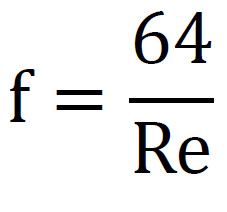
For laminar flow (Reynolds number Re<2000), the friction factor can be calculated using a Eq. 1:
Turbulent Flow
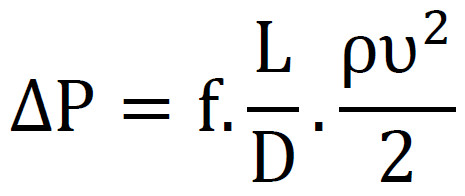
For turbulent flow (Reynolds number Re>4000), the friction factor is more complicated and can depend on the flow regime and the surface roughness of the pipe’s interior. The friction factor can often be determined using empirical correlations or charts, such as the Darcy-Weisbach equation or the Moody chart (Eq. 2).
Empirical Correlations
Popular empirical correlations that can provide expressions for f in turbulent flow include the Colebrook-White equation, which implicitly defines the friction factor based on Reynolds number and relative roughness ϵ/D (where ϵ is the roughness height):
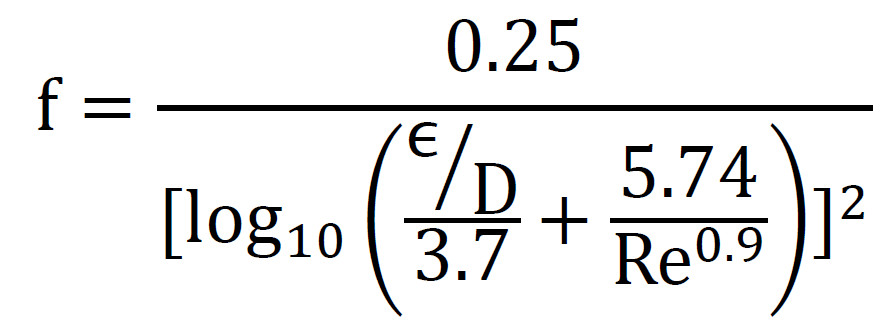
The Colebrook-White equation is the foundational expression for calculating the friction factor 𝑓. in turbulent flow, and while it requires an iterative solution due to its implicit nature, approximations like the Swamee-Jain equation are often used for simplicity in practical applications.
RESULTS AND DISCUSSION
Heat transfer rate comparison between TiO2 nanofluids and traditional fluids
The ability of nanofluids to enhance heat transfer and lower energy consumption has led to a growing interest in their application in heat exchangers. Many research have focused on the effects of various nanoparticles on heat transfer rates. In one of them, e.g., the enhancement of the pumping force and of the heat transfer coefficients was accompanied by the enhancement of the volume quantity of nanoparticles. An important improvement in the heat transfer coefficient was the outcome of another study that looked at the cooling characteristics of Al2O3-H2O nanofluid in an electronic refrigeration system. Experiments using CuO-water nanofluid in car radiators also showed improved cooling and heat transfer capabilities. Seawater marine heat pump systems that used graphene nanoparticle nanofluids demonstrated enhanced heat transfer efficiency as well, despite the fact that pump work increased with increasing nanoparticle concentrations. Additionally, the coefficient of performance of a heat pump was significantly improved by the use of copper and alumina nanofluids. In summary, our findings indicate that TiO2 nanofluids have a great deal of promise for raising heat transfer coefficients and thermal conductivity, which would improve heat pump performance. Nevertheless, more investigation is required to optimize the flow conditions and volume fraction for TiO2 nanofluids [1], [2], [8], and [14]. The effect of nanofluid mass fraction on the friction factor under laminar and turbulent flow conditions is shown in Fig. 4.
Fig. 5 shows the relationship between the pump work and thermal efficiency of the heat exchanger. The results show that, under the experimental conditions, the heat transfer effectiveness of the six measured nanofluids in the heat exchanger gradually increases with the increase of the pump work. The increase in heat exchange performance of the heat exchanger is often accompanied by a pressure drop or pump power consumption, which is in line with the first law of thermodynamics. Secondly, due to the increase in the heat transfer effectiveness of the heat exchanger caused by different concentrations of graphene nanofluids, the increase in unit pump work is greater than the increase in heat exchange capacity. The heat transfer effectiveness of graphene nanofluids at the concentration of 0.01~0.1 wt.% was greater than 0.5~1 wt.%. This indicates that graphene nanofluids with a concentration above 0.1 wt.% in the heat exchanger can improve the heat transfer by means of a greater thermal conductivity of the fluid, but also cause greater frictional resistance and consume more pump work. Furthermore, the relationship between the convective heat transfer coefficient and the Peclet number is depicted in Fig. 6.
Evaluation of energy efficiency improvements with TiO2 nanofluids in heat pumps
Numerous studies have been conducted on the assessment of TiO2 nanofluids’ potential to increase heat pumps’ energy efficiency. Additional research is necessary due to contradictory data about the impact of nanoparticle loading on pressure drop and pump power need. While some studies contend that nanofluids reduce pump power requirements as compared to traditional fluids, others contend that they increase pressure drop and pump power requirements. It’s crucial to remember, though, that nanofluids can improve overall performance by reducing the size and volume of heat exchangers and automobile radiators.
Nanofluids are frequently simulated using the finite volume method, however for thorough comparisons, alternative numerical techniques must be investigated. The effects of corrosion and erosion caused by the use of nanofluids especially under high temperatures also need to be explored. The impact of sedimentation and deposition of nanoparticles on the efficiency of heat transfer devices also need to be investigated. Lack of research on the cost of production and environmental impact is one of the greatest challenges to commercialization of nanofluids. These components require an in-depth understanding in order to implement it successfully. The concentration and flow velocity of nanoparticles has been shown to enhance heat transfer. This improvement does in fact lead to an increase in the friction factor and pump effort. Though the higher the concentration of nanoparticles, the greater the heat transmission, there is also an increase in frictional resistance leading to the increase in pump effort. The COP and EER performance of HVAC systems under various winter and summer simulations are compared in Fig. 7, while Fig. 8 illustrates the electric energy consumed by heat pumps to absorb heat across seasonal operating conditions. The impacts of TiO2 nanofluids on pressure drop, pump power requirements, and energy efficiency need further research, to sum up. The wear, corrosion, deposition, and nanoparticle deposition effects should be taken into account. The success of commercialization lies in the knowledge of the cost of manufacturing and the impact on the environment. Nanofluids can amplify the heat transfer in heat pumps, which requires practical implementation that involves trade-off analysis and careful application. [29-34].
Discussion on the potential impact and implications for heat pump technology
The use of TiO2 nanofluids in heat pump technology has shown potential for enhancing performance. However, there are contrasting reports on the effect of nanoparticle loading on pressure drop and pump power requirements. Some studies suggest that particle loading increases pressure drop and pump power requirements, while others argue that nanofluids actually lower pump power requirements when compared to conventional fluids. In heat exchangers and car radiators, the constant rate of heat transfer achieved with nanofluids can lead to a reduction in the size and volume of these devices, improving the overall performance of the engine and reducing drag forces in vehicles. Although the finite volume method is frequently used to simulate Several studies have demonstrated that titanium dioxide nanofluids can enhance heat pump efficiency by accelerating heat transfer and reducing energy consumption. They need further study to fully understand their impact on erosion, sedimentation, corrosion, deposition, and pressure decrease. [35-40The effective implementation of this technology in heat pump applications also hinges on addressing production costs, environmental impacts, and identifying specific systems in which nanofluids do not provide notable benefits.
nanofluids, more research with alternative numerical techniques is required for comparison. Further research is also needed on the impacts of heat transfer erosion and flow channel corrosion brought on by the usage of nanofluids, especially at high temperatures. Furthermore, it is necessary to investigate the immediate and long-term effects of sedimentation and nanoparticle deposition on the effectiveness of heat transfer devices.
Despite the highly promising outcomes of employing nanofluids in thermal systems, several obstacles still stand in the way of their successful commercialization. These elements, which have not gotten much attention in research, are the expense of production and the environmental impact. These are two significant barriers to the widespread usage of nanofluids. Furthermore, it is risky to think about certain thermal systems where nanofluids might not be required or useful. in spite of their possible benefits.
The contribution of titanium dioxide nanofluids to heat pumps
The use of nano-titanium dioxide fluids as additives has received widespread attention due to the search for sustainable heating and cooling systems and green heat pumps. A base fluid is combined with nanomaterials, such as nano-titanium dioxide particles, to create nanofluids. Compared to conventional working fluids, the improved thermo-physical properties of these nanofluids increase their ability to transfer heat. One of nano-titanium dioxide fluids’ main benefits is that it can improve the thermal performance of heat transfer devices. According to studies, nano-titanium dioxide fluids can increase effective conductivity by up to 40% even at low particle volume fractions. This development makes them promising for use in more compact and effective heat exchangers. Fluids containing nano-titanium dioxide may enhance geothermal resource utilization and boost energy extraction from reservoirs in the context of geothermal energy. Sensitivity experiments on heat transfer efficiency have demonstrated that nanofluids, particularly nano-titanium dioxide fluids, outperform traditional working fluids.
Furthermore, integrating TiO2 nanofluids with heat pumps can lead to significant improvements in performance and cost-effectiveness. By combining PV modules (clean technology for power generation) with heat pumps, energy savings of over 50% have been observed. Additionally, these integrated systems can reduce CO2 emissions by up to 73%, contributing to the decarbonization of buildings.
Despite these advantages, there are challenges associated with the application of TiO2 nanofluids. Sedimentation and degeneration of nanoparticles over time can impact the long-term performance of nanofluid systems. Researchers have proposed novel methods for re-dispersing aggregates in real-time during operation but further experimental verification is required.
Another challenge is foaming caused by surfactants used in nanofluid preparation, which can adversely affect heat or mass transfer applications. Therefore, the amount of surfactant employed should be limited.
In contrast to conventional fluids, some studies contend that nanofluids can reduce pressure loss and pump power requirements, while others imply that loading nanoparticles raises these requirements. Nanofluids can improve device size and volume by reducing the heat transfer surface in heat exchangers and automobile radiators. More research is required to advance the field because of the effects of utilizing nanofluids on corrosion and corrosion, as well as the short- and long-term effects of sedimentation and nanoparticle deposition on heat transfer efficiency. Research on environmental benefits and production costs will also be necessary for the commercialization of nanofluids. To sum up, TiO2 nanofluids have demonstrated a plethora of promise for improving heat pump efficiency and developing environmentally friendly HVAC systems. Their exceptional thermophysical qualities make them ideal for a wide range of applications, such as microprocessor cooling, PV component integration, and geothermal energy removal. To pass examinations and improve their performance in real-world situations, more research is required [40-42].
CONCLUSION
The commercial potential of titanium dioxide nanofluids lies in the fact that nanofluids could greatly boost the heat pump system performance. This is achieved by acting as an outer covering of the evaporator coil, where nanofluids enhance heat transfer much better than compressors, and reduce energy use by the compressors. The coefficient of performance of the heat pump is also enhanced when nanofluids are used. It has already been demonstrated that nanofluids have a higher heat transfer efficiency in thermal systems particularly ternary nanofluids. Thermal systems should be able to use nanoparticles that include factors such as the size of the nanoparticles used, their costs, and their availability. Nanoparticle concentration, flow rate and Reynolds number are system-specific factors that affect the performance of nanofluids-based systems. More studies have to be done to perfect these parameters. The results help to adopt TiO2 nanofluids in improving the performance of a heat pump system to the body of knowledge on nanofluid technology. Further studies are needed to streamline nanoparticle concentrations and flow rates to different engineering applications. TiO2 nanofluids have been promising in the performance of heat pumps because they are able to improve heat transfer. Research has discovered that TiO2 nanofluids have a higher heat transfer enhancement than other nanofluids. This improvement is credited to the hybridization effect and enhancement of the thermal conductivity in ternary nanofluids. Nanofluids however have disadvantages which include higher pressure drop and more pumping power. Pressure drop is proportional to viscosity though in some cases ternary nanofluids have lower viscosity than binary and mono nanofluids resulting in a decrease in pressure drop as the heat transfer rises. Additional studies are required to come up with concrete findings on the effectiveness of ternary nanofluids. Energy analysis is not enough to solve the energy losses hence; it is essential to explore the exergoeconomic performance and sustainability of TiO2 nanofluids in order to come up with energy efficient heat transfer systems. Long-term stability, perfection of theoretical models, exploration of natural convection in the presence of magnetic fields, and optimization of concentrations of nanofluid are aspects that need to be addressed. Co-locating PV modules and heat pumps is a chance to optimize the overall performance of the system, as it will result in an increase in Coefficient of Performance (COP), a decrease in energy consumption, and a decrease in CO2 emissions. A combination of wind, photovoltaic cells, heat pumps, and proper control is a hybrid system that can save a good portion of energy. The use of surfactants in nanofluids continues to have issues with foaming, sedimentation and degeneration of nanoparticles and long-term performance. TiO2 nanofluids can be used to improve the performance of the heat pump, although more studies are required to discuss the issues of stability, performance stability, and fluids concentrations. Integration of PV modules and heat pumps can enhance decarbonization and energy efficiency of buildings. TiO2 nanofluids can be used in various ways and play a significant role in heat pump technology. Nanofluids have gained attention for their unique cooling characteristics and enhanced thermal conductivity. Further research is needed to understand the interaction between nanoparticles and water molecules in nanofluids, as well as the effects of various phenomena and parameters on heat transfer. The most important factors are the selection of the correct base fluid and the correct preparation methods. The choice of nanofluid should take into account the most important effects on the pumping power requirements, as heat transfer deteriorates significantly with excessive particle loading. A major focus of future research should be on developing mathematical models using advanced software, in order to predict the behavior of nanofluids as well as to investigate integrated passive technologies. By addressing these gaps, nanofluids can be well optimized for specific engineering applications of interest and to enhance the performance of the heat pump.
CONFLICT OF INTEREST
The authors declare that there is no conflict of interests regarding the publication of this manuscript.
