
Document Type : Research Paper
INTRODUCTION
The discharge of synthetic dyes into natural aquatic systems has become a serious environmental problem because of the toxic and disruptive nature of these compounds on the ecosystem. Industrial sectors such as textile, leather tanning, paper production, cosmetics and pharmaceuticals produce huge amounts of pigmented effluents that are discharged into the aquatic environment without proper treatment [1]. The presence of such compounds deteriorates the water quality through various pathways such as visible discoloration, reduction in light penetration, depletion of dissolved oxygen, interference with biological processes of aquatic organisms and high oxygen demand indices [2]. Moreover, a large fraction of synthetic dyes and their transformation products are toxic, mutagenic and carcinogenic, thus their elimination from industrial effluents is an environmental priority of growing urgency [3].
Eosin B and Rhodamine B are two of the most problematic dyes in industrial use because of their structural stability and inherent resistance to natural pathways of biodegradation. Eosin B is an anionic xanthene dye used for histological staining and some textile applications. Rhodamine B is a cationic fluorescent dye commonly used for textile dyeing, paper printing, and as a tracer in fluorescence techniques. The continuous environmental release of both compounds raises serious concerns about ecology and public health since they are likely to persist in receiving water bodies for long periods [4].
Various remediation strategies have been investigated for dye-laden wastewater, including coagulation, membrane filtration, chemical oxidation, photocatalytic degradation and biological treatment approaches. All of them have practical disadvantages, including high operational cost, incomplete removal of pollutants, formation of secondary sludge and low efficiency at low target dye concentrations. On the other hand, adsorption is a practically attractive alternative, owing to the operational simplicity, high removal efficiencies, economic viability and broad environmental compatibility [5].
Engineered nanomaterials with unique physicochemical properties have greatly broadened the scope of water purification tools. The zinc oxide nanoparticles (ZnO NPs) have been the subject of continuous research interest mainly due to their large specific surface area, thermal and chemical resilience, low toxicity profile, semiconducting character and abundance of reactive surface sites. These nanomaterials are promising candidates for the treatment of organic pollutants in aqueous systems due to the adsorptive capacity and photocatalytic activity based on the hexagonal wurtzite crystal structure of ZnO [6].
Reduction of ZnO to the nanoscale greatly increases the surface-to-volume ratio and thus the density of the sites available for interaction with the dye molecule and the overall adsorption capacity [7]. Besides the performance, ZnO nanoparticles offer other practical benefits: they are available via cost-effective synthesis routes, are relatively eco-friendly, and have shown broad activity against structurally diverse classes of organic dyes, which further strengthens their potential for environmental remediation applications [8].
The present study reports on the adsorptive behaviour of ZnO nanoparticles towards Eosin B and Rhodamine B under systematically varied operating conditions. The optimum removal parameters were evaluated for contact time, temperature, adsorbent loading and solution pH individually. Then, the equilibrium isotherm modeling and thermodynamic analysis were carried out to interpret the adsorption mechanism and to characterize the nature of interactions between the dye molecules and the ZnO surface [9].
MATERIALS AND METHODS
Materials
For all experiments, chemicals and solvents of high purity grade and commercial origin were used. Chemical Precipitation Synthesis of Zinc Oxide Nanoparticles.
Synthesis of Zinc Oxide Nanoparticles via Chemical Precipitation
ZnO nanoparticles were prepared by the wet chemical precipitation of a solution of zinc acetate dihydrate in a strong base (sodium hydroxide solution). The 0.1 M solution of Zn (CH3COO)2·2H2O (2.19 g) in 100 mL of distilled water was first prepared as a homogeneous solution by heating at 60 °C with constant stirring using a magnetic stirrer. Then, 100 mL of distilled water containing 0.8 g of NaOH (0.2 M) was added dropwise at 60 °C with constant stirring until the pH of the resulting suspension reached 10–11. The resulting suspension was stirred for 1 h to complete the reaction, and then it was allowed to stand at room temperature for 24 h to allow sufficient time for crystal growth. The resulting solid was then centrifuged at 4000 rpm for 15 min, washed three times with distilled water and once with ethanol to remove impurities, and dried at 80 °C for 6 h. Finally, the resulting solid was calcined at 500 °C for 1 h to form well-defined ZnO crystallites [7].
Preparation of Dye Solutions
For the preparation of stock solutions, 1 g of Eosin B and Rhodamine B were dissolved in 1 L of deionized water to obtain a 1000 mg/L dye solution. Working solutions of the same concentration were prepared from the stock solutions by appropriate dilution with deionized water. The pH value of the dye solutions was adjusted with 1 M HCl or 1 M NaOH using a pH meter, and the UV/VIS spectra of the solutions were recorded with a UV/VIS spectrophotometer (UV/VIS1650PC SHIMATZU). The maximum wavelengths λmax of the absorbance of the dyes were determined at 514 nm for Eosin B and at 546 nm for Rhodamine B. From the calibration curves that were plotted with the same dilutions of the stock solutions, the concentrations of the dyes in the prepared solutions were calculated.
Adsorption Studies
For the investigation of the adsorption of Eosin B and Rhodamine B dyes on ZnO nanoparticles by the batch method, a series of experiments was performed. For these experiments, 1 g of ZnO nanoparticles was placed into a 25 mL volumetric flask and 25 mL of a dye solution with a given initial concentration was added. After that, the flasks were placed on a mechanical shaker and the solution was allowed to come into contact with the nanoparticles at 120 rpm for a given time. The following parameters were varied in the course of the experiments: contact time between the solution and the nanoparticles (30 min, 1 h, 2 h, 3 h, 4 h, 5 h), solution temperature (25 °C, 30 °C, 35 °C, 40 °C, 50 °C) and the amount of adsorbent (0.1 g, 0.2 g, 0.3 g, 0.4 g, 0.5 g) as well as the initial concentration of the solution (10 mg/L, 20 mg/L, 30 mg/L, 40 mg/L, 50 mg/L). The solution pH was adjusted with 1 M HCl and 1 M NaOH. After the end of the contact time, the solution was removed from the flasks and filtered with a membrane filter. The concentration of the non-adsorbed dye in the solution was determined with a UV-visible spectrophotometer at the maximum absorbance wavelength of the dyes (514 nm for Eosin B and 546 nm for Rhodamine B). From the results, the amount of adsorbed dye (qe) as well as the degree of removal of the dye from the solution were calculated with Eqs. 1 and 2 [10]:
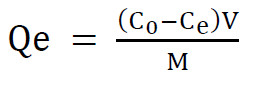

Where: C0 is the initial dye concentration before adsorption (mg/L). Ce is the residual dye concentration after adsorption (mg/L).
RESULTS AND DISCUSSION
X-ray Diffraction (XRD) Analysis of ZnO Nanoparticles
The synthesized ZnO nanoparticles were characterized by X-ray diffraction (XRD) analysis for their crystal structure, crystallinity and crystallite size. The diffraction pattern of Fig. 1 showed sharp and intense peaks at about 31.73°, 34.37°, 36.21°, 47.49°, 56.56°, 62.81°, 66.32°, 67.91° and 69.06°. The obtained reflections have been indexed to the (100), (002), (101), (102), (110), (103), (200), (112) and (201) crystallographic planes, respectively, confirming the characteristic hexagonal wurtzite phase of ZnO and agreement with the standard JCPDS card No. 36-1451. The absence of extra peaks confirmed that the synthesized nanoparticles were pure ZnO without any detectable secondary phases. The sharp diffraction peaks reveal good crystallinity and the broadening of the peaks confirms the nanoscale crystallite size [11].
Thermal Analysis (TG–DSC) of ZnO Nanoparticles
The simultaneous analysis of ZnO nanoparticles by TG-DSC was carried out from room temperature up to about 900 °C. Fig. 2 illustrates the TG-DSC results. The thermogravimetry curve showed only minor changes in weight. At low temperature the weight increased slightly and then decreased slowly as the temperature increased. The DSC curve displays two main thermal events. The first event was observed around 102.2 °C with an enthalpy value of 78.49 J/g, which can be attributed to the evaporation of surface moisture or loosely bound water. A second event was observed around 517.6 °C with ΔH of 177.55 J/g and may be due to internal crystal rearrangement, improvement of crystallinity or relaxation of lattice defects. The DSC transitions without considerable mass loss in the TG profile show that the observed changes are mainly connected to structural or energy changes and not to decomposition processes. This behavior agrees with the XRD results which showed the formation of pure crystalline ZnO with hexagonal structure [7].
Scanning Electron Microscopy (SEM) Analysis of ZnO Nanoparticles
SEM analysis was used to study the surface morphology and particle features of synthesized ZnO nanoparticles at magnifications ranging from 60,000× to 120,000×. The SEM micrographs of the prepared sample are shown in Fig. 3. The prepared sample consisted of nanosized particles assembled in porous aggregated clusters. Such agglomeration is a common feature of metal oxide nanoparticles due to their high surface energy, which gives rise to attractive forces between neighboring particles [12].
The rough and porous morphology is favorable for adsorption because of the enlarged effective surface area and plentiful active sites, edges, cavities and diffusion pathways for dye molecules. Thus, the high removal efficiency obtained for Eosin B and Rhodamine B is due to the nanoscale size and favorable surface texture of the synthesized ZnO nanoparticles [13].
Calibration Curve
Calibration curves were constructed for Eosin B and Rhodamine B by plotting absorbance versus concentration (Fig. 4). For both dyes, linear plots were obtained passing very close to the origin in the studied concentration range. The correlation coefficients (R²) were close to one, confirming the applicability of the Beer-Lambert law and the reliability of the UV-visible measurements.
The calibration plots were strongly linear, suggesting that possible spectral interferences or deviations were small. From these curves, residual dye concentrations after adsorption were calculated. The differences in the slopes of the calibration lines are most probably related to different molar absorptivities of the two dyes.
Effect of Contact Time
The synthesized ZnO nanoparticles were tested to study the effect of contact time on the removal efficiency of both dyes. The adsorption percentages were measured at time intervals of 30–240 min. As shown in Fig. 5, the dye removal was markedly increased with the increase of the contact time. The fast adsorption in the initial stage could be attributed to the availability of large number of active sites on the surface of ZnO. As time elapsed, the active sites were gradually occupied and the adsorption rate decreased until equilibrium was reached [14].
The equilibrium was reached at about 120 min. The increase in removal efficiency was limited after that. This behavior is consistent with a multi-step adsorption mechanism involving fast adsorption at the surface, diffusion of dye molecules into the inner pores and establishment of a dynamic equilibrium between adsorption and desorption. Hence, for the subsequent experiments, 120 min was selected as the contact time at equilibrium. In the presence of ZnO nanoparticles, the percentage removal of Eosin B increased from 61.22% at 30 min to 97.88% at 240 min. The removal of Rhodamine B increased from 54.66% at 30 min to 93.65% at 240 min under the same conditions.
Effect of Temperature
The effect of temperature on removal of dye by nanoparticles of ZnO was studied in the range 25–50 °C. The results showed that the removal efficiency was reduced with increasing temperature and the maximum adsorption was achieved at 25 °C. This behavior is consistent with the exothermic nature of the adsorption process and suggests that the adsorption of dye by ZnO nanoparticles is mainly physical in nature. Physical adsorption is associated with interactions between the adsorbate molecules and the adsorbent surface with relatively weak binding forces [6,15]. At higher temperatures dye molecules acquire more energy, are less stable on the surface and desorption is more favourable. The relationship between percentage removal and temperature is shown in Fig. 6.
Effect of Adsorbent Weight
The effect of the dosage of ZnO nanoparticle containing 10 mmol of Zn2+ ions on the removal of Eosin B and Rhodamine B was studied with experiments carried out at 25 °C and contact time of 120 min while varying the adsorbent weight (W) from 0.1 to 0.5 g. As illustrated in Fig. 7, the removal efficiencies of Eosin B and Rhodamine B increased from 70.86% and 74.46% at 0.1 g to approximately 96.71% and 94.22% at 0.5 g, respectively. This enhancement is due to the increased number of active sites provided by the increased amount of adsorbent which provides better contact possibilities between dye molecules and ZnO nanoparticles. For Eosin B, the removal efficiency increased with adsorbent weight from 0.1 to 0.5 g, with values of about 70.86% at 0.1 g, 95.55% at 0.3 g and 96.71% at 0.5 g. The enhancement of both dyes can be explained due to the increased surface area and the increased number of adsorption sites on the surface of the ZnO nanoparticles which provide more sites for the dye-surface interaction [3].
For Rhodamine B, the removal increased from 74.46% for 0.1 g to about 94.22% for 0.5 g. At higher dosages, the increase was less obvious as the adsorption system approached equilibrium.
As shown in Fig. 7, the improvement in removal efficiency was more obvious for lower amounts of ZnO. More specifically, an increase of ZnO from 0.1 to 0.2 g showed a higher increase in the removal of Eosin B and Rhodamine B than the increase of dose from 0.3 to 0.5 g. The increase in the amount of adsorbent is expected to increase the number of available adsorption sites which are progressively occupied by the dye molecules [1].
At higher dosages, ZnO nanoparticles can aggregate, which reduces the available surface area for adsorption [7]. The results reveal that there is an optimum amount of the adsorbent for the maximum removal of both dyes under the studied conditions. In this study, almost 0.3 g of ZnO NPs was enough and cost effective.
Eosin B was removed more efficiently than Rhodamine B. This difference may be related to the molecular structure of each dye, their charge in the applied conditions and the specific way in which each dye interacts with the ZnO nanoparticle surface. In general, an increase in the adsorbent dose increased the removal efficiency until the system reached saturation. The response is consistent with the concept of Langmuir adsorption, which assumes monolayer coverage and equal occupation of adsorption sites on the surface of the adsorbent [16,17].
Effect of pH
The removal efficiencies of the two dyes versus the solution pH are presented in Fig. 8. The optimum removal of Eosin B was observed at pH 2 with 82.44% removal; after that the removal decreased with increasing pH. The removal of Eosin B was found to be 52.98% at pH 10. This trend is connected with the anionic character of Eosin B. In acidic solutions, the surface of ZnO nanoparticles was positively charged by protonation, which favors electrostatic attraction with negatively charged dye molecules. However, with increasing pH, the surface of ZnO becomes negatively charged which causes repulsion with Eosin B molecules and decreases the removal efficiency [5,18].
Adsorption of Rhodamine B increased from 59.66 % at pH 2 to a maximum of 83.40 % at pH 8 and it decreased with increasing pH to 10. This pattern may be associated with the cationic or zwitterionic form of Rhodamine B. Adsorption on ZnO is more effective at neutral to slightly alkaline pH. At low pH, a large number of hydrogen ions occupy the active sites of the ZnO surface which limits the adsorption of dye [4,19].
The results suggest that the optimal pH for ZnO nanoparticle dye removal depends on the structure and charge of the dye in solution. Thus, pH is an important operational parameter to be controlled for high removal efficiency for target pollutants.
Thermodynamic Parameters
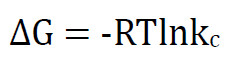
Gibbs free energy change (Delta G) was determined at different temperatures using Eq. 3 [20]:
The equilibrium constant (Kc) was calculated according to Eq. 4[10]:
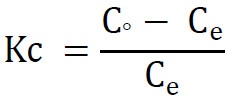
The negative values of delta G for both the dyes at lower temperature suggested that the adsorption was spontaneous under these conditions. For Eosin B over ZnO NPs, Delta G values were in the range between -7.45 and -2.95 kJ/mol confirming the spontaneous adsorption at all the studied temperatures.
The corresponding Delta G values for Rhodamine B were between -4.46 and +0.40 kJ mol-1 under the same conditions. The transition to positive values at high temperature indicates that the adsorption became less favorable and non-spontaneous at higher temperature.
The Van’t Hoff equation was applied as Eq. 5 [21]:
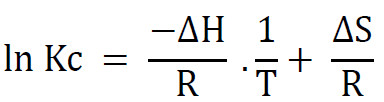
The ΔH and ΔS values of both dyes were calculated from the plot of ln Kc vs 1/T (Fig. 9). Both dyes showed negative values of ΔH, which confirmed the exothermic nature of adsorption. The negative values of ΔS indicate the decreased randomness at the solid-liquid interface which can be attributed to the ordered arrangement of dye molecules on the surface of the adsorbent [22].
Nature of Adsorption
The enthalpy change (Delta H) for adsorption was assumed to be within the range usually found for physical adsorption. Chemisorption is generally associated with higher ΔH values, although some contribution may be suggested in the case of Eosin B, where negative ΔG values were observed. Physical adsorption is generally exothermic and is favored at lower temperatures [23].
Adsorption Isotherms
The adsorption isotherms of Eosin B and Rhodamine B onto ZnO nanoparticles were explained by Langmuir and Freundlich models. These models are widely used for the description of the adsorbent surface behaviour and explanation of the nature of adsorption.
Langmuir Isotherm
Langmuir model is an equation for adsorption on the surface of an adsorbent having a fixed number of equivalent active sites. Each site can accommodate one solute molecule, so the coverage is monolayer, and the interactions between adsorbed molecules are neglected. The linear form of the Langmuir equation can be given as Eq. 6 [17]:
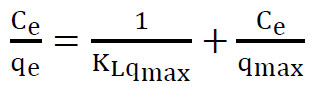
The equilibrium data of adsorption of Eosin B and Rhodamine B on ZnO were fitted to Langmuir and Freundlich isotherm models, which gave more insight into the surface of ZnO and the adsorption mechanism. The isotherm fitting of both dyes is shown in Figs. 10 and 11. The correlation coefficients of Langmuir for Eosin B and Rhodamine B were 0.994 and 0.965, respectively, which are in good agreement with the Langmuir model. This suggests that the ZnO surface offered relatively homogeneous active sites with similar adsorption energy and that dye molecules were predominantly distributed as a monolayer on the nanoparticle surface [24].
The separation factor (RL) was determined using the Eq. 7 [25]:
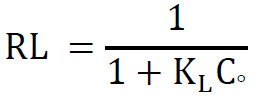
The calculated values of RL were in the range 0-1 which indicates favorable and efficient adsorption. The RL value was 0.018 for Eosin B and 0.184 for Rhodamine B.
The maximum adsorption capacity (qmax) for each dye was determined by linear regression of the experimental data. The value of KL (Langmuir constant) for Eosin B was 1.086 L/mg while qmax was 1.108 mg/g. The qmax and KL for Rhodamine B were 2.043 mg/g and 0.0886 L/mg.
These findings indicate that Eosin B has a higher affinity towards the surface of ZnO as demonstrated by the higher KL value, whereas the adsorption capacity of Rhodamine B is higher than Eosin B.
Freundlich Isotherm
The Freundlich model is an empirical isotherm that describes adsorption on heterogeneous surfaces with non-uniform active-site energies and allows multilayer adsorption. It is expressed as Eq. 8 [26]:
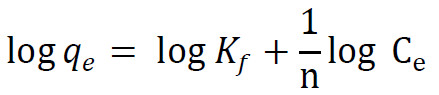
where Kf is the Freundlich constant related to adsorption capacity and n is the adsorption intensity. Values of n greater than 1 suggest a favorable adsorption, while values of n less than 1 suggest a weak adsorption.
Langmuir model was more suitable than Freundlich model although Freundlich model gave an acceptable fitting. The non-ideal slope suggests surface heterogeneity and the possibility of multilayer adsorption. The R2 values were lower than those obtained from Langmuir fitting (Figs. 12 and 13), indicating that this model was less suitable for the present system, especially for Rhodamine B. However, Eosin B showed a relatively stronger Freundlich type behavior which indicated variation in the energies of adsorption sites and differences in the interaction of each dye with ZnO nanoparticles [27].
Adsorption Kinetics
Adsorption kinetic studies for Eosin B and Rhodamine B on ZnO nanoparticles were performed to investigate the adsorption mechanism and to find out the rate limiting step. Pseudo-first-order and pseudo-second-order models were used to study kinetic behavior.
Pseudo-First-Order Kinetic Model
The pseudo-first order model assumes that the rate of adsorption is proportional to the number of unoccupied active sites on the surface of the adsorbent. Its linear equation can be written as Eq. 9 [28]:

where qe is the equilibrium adsorption capacity (mg/g), qt is the adsorption capacity at time t (mg/g), k1 is the pseudo-first-order rate constant (min-1) and t is the contact time (min).
Figs. 14 and 15 show the linear plots of log (qe-qt) vs time for both dyes. The R2 values of the correlation coefficient showed a reasonable agreement between the experimental data and the pseudo-first-order model. However, the fitting quality was lower than that of the pseudo-second-order model, particularly in Eosin B adsorption [28].
The R2 value for calculated Eosin B was 0.951, i.e., this model had moderate applicability. The R2 of 0.996 showed better agreement with Rhodamine B. However, the difference between calculated and experimental adsorption capacities suggests that the pseudo-first order model can not fully explain the adsorption mechanism of the investigated dyes.
Pseudo-Second-Order Kinetic Model
The pseudo-second-order model assumes that the adsorption rate depends mainly on adsorption capacity and the availability of active surface sites. The equation is written in linear form as Eq. 10 [14]:
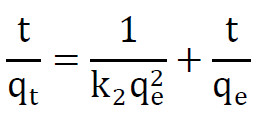
k2 is the pseudo second order rate constant (g mg−1 min−1). The linear plots of t/qt versus t for both the dyes indicated that the adsorption kinetics followed the pseudo second-order model [14]. The correlation coefficients (R2) were 0.992 for Eosin B and 0.999 for Rhodamine B. The values suggest that the adsorption was mainly controlled by dye–surface interaction and gradual filling of active sites on ZnO NPs.
The fast adsorption in the first step is due to the large number of available active sites on the surface of ZnO. The number of vacant sites decreased gradually with the rate of adsorption getting slower until equilibrium was reached at around 120 min as adsorption proceeded. Similar kinetic behavior has been reported for dye adsorption on metal oxide nanoparticles and other nanostructured adsorbents [27].
The pseudo-second-order model fitted the adsorption kinetics well and the adsorption process was mainly physical in nature. The dyes also showed a reasonable agreement with the pseudo-first-order model. The better suitability of the pseudo-second-order kinetic model was confirmed by the higher coefficients of correlations.
CONCLUSION
The study confirmed the successful synthesis of crystalline ZnO nanoparticles with nanoscale dimensions, porous morphology and high thermal stability. The properties of the nanoparticles make them efficient adsorbents for the removal of dye from aqueous solution. The synthesized ZnO nanoparticles showed high efficiency for the removal of Eosin B and Rhodamine B and the adsorption performance was greatly affected by contact time, temperature, adsorbent dose and pH of the solution. The equilibrium was attained at 120 min and the decrease in adsorption efficiency with increasing temperature indicates the exothermic nature of the reaction. The equilibrium data obeyed the Langmuir isotherm model indicating monolayer adsorption on a homogeneous surface. Kinetic results revealed that the adsorption of both dyes obeyed the pseudo-second order model with high correlation coefficients. Further thermodynamic analysis showed that at low temperatures the adsorption was favourable and spontaneous. In conclusion, ZnO nanoparticles can be regarded as effective, promising, and eco-friendly nanoadsorbents for wastewater treatment applications.
CONFLICT OF INTEREST
The authors declare that there is no conflict of interests regarding the publication of this manuscript.
