
Document Type : Research Paper
INTRODUCTION
Thermoelectric energy conversion is a solid-state method of converting temperature differences into useful electrical power and for localized cooling. It is typically described as having a dimensionless figure of merit ZT = S²σT/κ, in which the Seebeck coefficient S, electrical conductivity σ, and total thermal conductivity κ are highly interrelated. As such, this coupling renders thermoelectric design inherently multi-objective: charge transport optimization can improve σ while at the same time degrading |S| or increasing electronic heat conduction, and lowering the lattice thermal conductivity improves ZT only if the electronic heat channel remains controlled [4,8,10,14-16]. As a result, joint optimization of the electronic and thermal transport is essential for physically credible predictions.
More than a decade ago, quantum confinement and nanoscale structuring were proposed routes for reshaping the electronic density of states and suppressing phonon-mediated heat transport. Foundational studies of quantum wells and quantum wires demonstrated that density-of-states engineering could improve thermoelectric performance in low-dimensional systems when transport conditions are appropriate [11,12]. Subsequent work broadened this picture by emphasizing simultaneous control of carrier transport, interfaces, and phonon scattering in low-dimensional systems [13-18]. Recent reviews continue to identify nanowires and other one-dimensional architectures as valuable platforms for studying coupled electron-phonon transport and confinement-driven thermoelectric effects [18,22].
Because of its small conduction-band effective mass, narrow band gap, high electron mobility, and strong sensitivity to temperature, pressure, confinement, and surface conditions, InAs is especially interesting for these studies [5-7,9]. Although experimental studies of InAs nanowires have shown potentially high room-temperature field-effect mobility, these same studies also indicate that a significant degradation in mobility can occur with decreasing diameter or when surface roughness and surface states become more prominent [19-21]. Such observations have direct implications for confined InAs thermoelectric, as all the quantities of interest (i.e., relaxation time, electrical conductivity, and electronic thermal conductivity) depend on the scattering environment, and thereby warn against treating nanoscale mobility as a material constant that can be freely adjusted.
These studies use detailed thermoelectric measurements and simulations to explain why we must exercise caution with optimistic predictions at the nanoscale. Mensch et al. reported a higher room-temperature power factor of ~1.7 mW m-1 K-2 for thin passivated InAs nanowires [1], while Chen et al. showed that this does not assure a universal power factor advantage of one-dimensionality [2]. In their large-scale atomistic calculations, Archetti and Neophytou showed that confinement, carrier concentration, and scattering together dictate the achievable InAs nanowire behavior [4]. In terms of thermal transport, Wang et al. quantified significant lattice-thermal conductivity suppression in InAs nanowires and associated it with surface electron-phonon coupling in combination with phonon-boundary scattering [3]. Similar findings have also emerged in the larger literature focused on nanoscale thermal transport, where the primacy of boundaries and interfaces in phonon transport is well known [17].
This is expected considering the progress made; however, nanowire parameters cannot be directly transferred to a hollow spherical shell. A hollow spherical shell combines finite three-dimensional confinement with two radial boundaries, and its discrete spectrum depends simultaneously on the inner and outer radii. Under compression, both the confinement domain and the InAs band parameters evolve. Although established relations are available for the temperature dependence of the band gap, hydrostatic elastic response, and III-V band parameters [5-7,9], mobility and lattice thermal conductivity for the specific spherical-shell architecture considered here are not independently established over the full operating range. The extensive nanostructure literature therefore supplies physically meaningful bounds and trends, but not direct validation of the present geometry [13-22].
The central research gap addressed here is consequently more specific than the absence of another multidimensional optimization study. There remains a need for a transparent framework that connects the discrete electronic structure of an InAs spherical shell to thermoelectric transport while clearly separating quantities determined by the confinement model from transport inputs constrained only by related experimental and theoretical literature. Such a framework should distinguish a literature-consistent reference prediction from conservative and optimistic constitutive possibilities, quantify the sensitivity of ZT to those assumptions, and prevent sampled boundary maxima from being reported as experimentally validated or unconstrained optima.
Accordingly, the present study develops an audited, literature-bounded computational framework for an InAs hollow spherical-shell nanostructure. The model couples pressure-dependent shell geometry and electronic parameters with a hard-wall discrete spectrum, Fermi-Dirac carrier statistics, relaxation-time Boltzmann transport, and separate electronic and lattice contributions to thermal conductivity. Instead of using an unconstrained relaxation-time fit, electronic transport is anchored to conservative, reference, and optimistic mobility scenarios informed by InAs nanowire measurements and modeling [1,4,19-21]. Lattice thermal conductivity is treated through corresponding literature-bounded scenarios informed by measured nanoscale thermal suppression [3,17,18]. The mobility and lattice-conductivity choices are then propagated jointly as a deterministic 3 x 3 constitutive matrix rather than assigned unsupported statistical probabilities.
Also, as a second goal, you qualify numerical predictions within physical and computational limits. It thus implements checks encompassing contemporary physics with regard to both spectrum-capacity, bracketed particle-number conservation, unit and grid consistency, and prescribed ranges with respect to temperature, compressive pressure on the carrier density, as well as shell geometry. We provide examples of how geometry is handled as a screening variable under the reference constitutive scenario, and why the largest value occurring at a sampled boundary is identified with a boundary-grid maximum but not proof of an interior optimum. This treatment offers broader lessons in low-dimensional thermoelectric research that improvements need to be demystified with scattering, interfaces, and limits of validity [13-18,22].
Thus, this work contributes a provisional design-screening methodology instead of an assertion of empirical validation on the suggested shell. It provides (i) a self-consistent link from pressure- and temperature-dependent InAs electronic structure to thermoelectric coefficients, (ii) literature-anchored electronic and lattice transport scenarios without refitting to the reported results, (iii) joint propagation of constitutive uncertainty to define a deterministic ZT envelope, (iv) geometry screening with explicit boundary and applicability qualifications, and (v) a validation path that separates agreement in transport magnitude with related InAs nanostructures from validation of the spherical-shell architecture itself. The following sections present the governing model, numerical qualification procedure, literature-bounded transport scenarios, reference response, constitutive envelope, and geometry-screening results.
THEORETICAL FRAMEWORK
Physical System and Pressure-Dependent Spherical-Shell Geometry
The modeled structure is an InAs hollow spherical-shell nanostructure defined at zero pressure by the inner and outer radii, Rin,0 and Rout,0, respectively. The semiconductor region Rin,0 < r < Rout,0 constitutes the finite three-dimensional confinement domain for conduction-band electrons. A reference geometry of Rin,0 = 20 nm and Rout,0 = 60 nm is used for the operating-condition and constitutive-scenario analyses. The applied pressure is restricted to the nonnegative compressive regime considered in this work and is represented as a uniform elastic contraction that preserves spherical symmetry [1,2,5,6]
Consistent with the implemented spherical-shell geometry model, the pressure-dependent linear compression factor is

where P is the applied compressive pressure, s11 and s12 are the elastic compliance constants, and fP is the pressure-dependent linear compression factor

Because the same factor is applied to both radii, the radius ratio and spherical symmetry are preserved over the investigated pressure range. The corresponding shell volume is:

The compressed radii and shell volume define the pressure-dependent confinement domain used in the subsequent electronic-structure and carrier-statistics calculations. For the separate geometry-screening analysis, the structure is parameterized by the inner radius Rin and shell thickness tsh, with Rout = Rin + tsh. This screening parameterization is distinguished from the 20/60 nm reference geometry used for the operating-condition and constitutive-uncertainty analyses; the screened geometries are therefore treated as sampled design configurations rather than as an experimentally established optimum.
Pressure- and Temperature-Dependent Electronic Parameters
After updating the shell geometry, the InAs electronic material parameters are evaluated consistently at each pressure-temperature condition. On the audited platform, the output of the band gap is directly in meV, pressure P in kbar, and temperature T in kelvin. The relation includes temperature-dependent narrowing of the InAs gap, which is affected by increasing pressure: [5,7]

where Eg is the pressure- and temperature-dependent band-gap energy. The numerical coefficients in Eq. 4 are implemented in the audited InAs material module, and these are kept unchanged in the present calculations. From this formulation, we get Eg = 468.1 meV at 300 K and ambient pressure, while increasing monotonically with the compressive pressure across the studied range of pressures from 0 to 5 kbar.
The conduction-band electron effective mass is then evaluated from the same band-gap value using the implemented three-band Kane-type relation: [7]
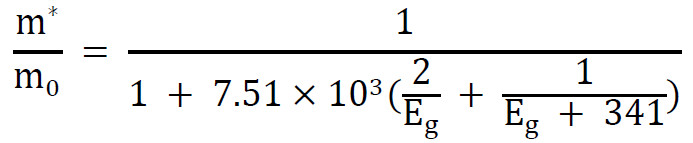
where m* is the conduction-band electron effective mass, m0 is the free-electron mass, and Eg is inserted in meV. The constant 341 meV represents the spin-orbit splitting used by the material model. Because Eg(P,T) is evaluated first and then passed directly to the effective-mass relation, the pressure and temperature dependences of the band gap and effective mass remain internally coupled. The resulting m*(P,T) is used consistently in the confined-state spectrum and in the mobility-to-relaxation-time conversion employed by the literature-bounded transport model.
Discrete Shell Spectrum
Quantum confinement is treated within a single-band effective-mass description for an electron confined between two concentric hard-wall spherical boundaries. For each angular-momentum quantum number l, the radial solution is expressed as a linear combination of spherical Bessel functions of the first and second kinds. Imposing zero wavefunctions amplitude at the pressure-dependent inner and outer radii yields the shell eigenvalue condition [7]

where jl and yl are spherical Bessel functions, x is the dimensionless radial eigenvalue, and η = Rout/Rin is the shell radius ratio. Because the same pressure-compression factor is applied to both radii in Section 2.1, η remains unchanged with pressure for the reference shell. The positive roots xnl of Eq. 6 are located numerically for each l and define the discrete radial modes retained by the audited solver.
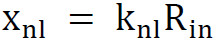
With knl = xnl/Rin(P), the confinement energy associated with each radial-angular mode is
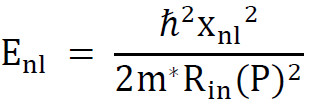
where ℏ is the reduced Planck constant and m* = m*(P,T) is the pressure- and temperature-dependent conduction-band effective mass from Section 2.2. Each level is assigned the spin and magnetic-sublevel degeneracy gl = 2(2l + 1). The resulting levels are sorted by energy and passed directly to the discrete Fermi-statistics calculation. In the implemented root search, angular momenta up to l = 14 are included, with up to 18 positive roots retained for each l and a dimensionless search range extending to x = 80; these numerical bounds provide the finite spectrum used by the subsequent carrier-conservation and transport calculations.
Carrier Statistics and Chemical Potential
For each pressure-temperature-density point, the discrete shell spectrum is populated using Fermi–Dirac statistics rather than a continuum density-of-states approximation. The prescribed carrier density is first converted from cm⁻³ to m⁻³ and multiplied by the pressure-dependent shell volume to obtain the target number of electrons represented by the finite spectrum: [8]

where n in cm⁻³ is the input carrier density and Vsh(P) is the compressed shell volume from Eq. 3. This way, one physically couples the imposed carrier concentration directly to the geometry that depends on pressure.
This will lead both to the occupation probability of a discrete energy level being in its i-th state and to looking for a trial possible μ.
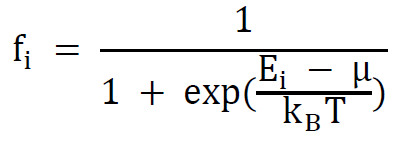
where Ei is the level energy, kB is the Boltzmann constant, and T is the absolute temperature. For the counting of occupied states, the spin and magnetic-sublevel degeneracy gi = 2(2l + 1) introduced in Section 2.3 is used separately.
The chemical potential is obtained by enforcing particle-number conservation over the retained discrete spectrum:
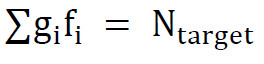
We numerically solve the bracketed root search for the nonlinear equation. The implementation runs an interval for the search below and above the minimum and maximum retained level energies, respectively, where in such cases we numerically clip the exponential argument to avoid overflow while still maintaining relevant occupations physically. A spectrum-capacity check is also applied: if the requested electron number approaches the total degeneracy of the retained spectrum, the calculation is rejected rather than extrapolated beyond the available states. The resulting μ is then passed directly to the transport-moment calculation in the next stage.
Transport Moments and Electronic Coefficients
Electronic transport is evaluated within the relaxation-time Boltzmann framework. The energy-weighted transport moments provide the quantitative bridge between the discrete shell spectrum, the Fermi window established in previous section, and the thermoelectric coefficients evaluated subsequently. For each retained state i, the equilibrium occupation is calculated using Eq. 10, and the corresponding Fermi-window derivative is [4,8,9]:
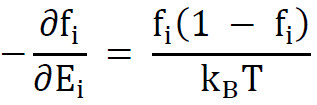
where Ei is the discrete state energy, μ is the self-consistent potential, kB is the Boltzmann constant, and T is the absolute temperature. The transport weighting function used by the audited discrete-state solver is:
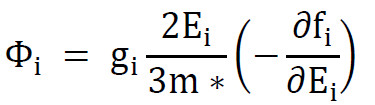
where gi is the state degeneracy and m* is the pressure- and temperature-dependent effective mass. The factor 2Ei/(3m∗) supplies the velocity-squared weighting used in the implemented isotropic effective-mass transport representation.
The energy-weighted transport moments are then defined as:

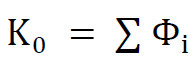


Thus, K0, K1, and K2 sample progressively higher energy moments about the chemical potential while retaining the discrete-state degeneracy and the Fermi-window weighting. These moments are evaluated at every pressure, temperature, carrier-density, and geometry point and form the common electronic input for the Seebeck coefficient and Lorenz-number calculations. The mobility model couples electrical conductance separately to the literature-bounded relaxation time, so the transport formalism is consistent with the audited constitutive treatment applied in the results.
Then, the transport moments are turned into the electronic thermoelectric coefficients via



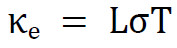
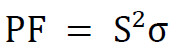
where q is the elementary charge, τ is the carrier relaxation time, L is the Lorenz number, σ is the electrical conductivity, κₑ is the electronic thermal conductivity, and PF is the power factor. We keep electronic-heat transport explicit, instead of absorbing it into an effective global thermal conductivity.
Literature-Bounded Mobility and Relaxation Time
Note that the relaxation time is not considered an unconstrained fitting parameter. The previous multiplicative relaxation-time formulation generated a power factor well above the target InAs experimental comparator and is retained as a diagnostic legacy control only. In the audited formulation, conservative, reference, and optimistic electronic-transport scenarios are instead defined from literature-bounded InAs nanowire mobility behavior. [1,4]
At every pressure-temperature operating point, the selected mobility is converted to the carrier relaxation time using.
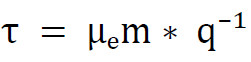
where μₑ is the electron mobility and q is the elementary charge. This conversion preserves the coupling between the electronic structure and the scattering timescale before electrical conductivity is evaluated through Eq. 20.
The conservative, reference, and optimistic mobility scenarios are propagated without refitting. Their quantitative power-factor consequences and comparison with the experimental InAs-nanowire benchmark are reported in Section 3.1, where the distinction between literature-based plausibility and direct validation is maintained [1,4].
Lattice-Thermal-Conductivity Scenarios
Lattice thermal conductivity is not assumed to be uniquely known for the proposed InAs spherical shell because boundary scattering, surface condition, dimensionality, and electron–phonon coupling can substantially modify heat transport at the nanoscale [3,4]. Accordingly, the audited framework retains a bulk-like legacy baseline together with conservative, reference, and optimistic literature-bounded scenarios.
At 300 K, the retained lattice-thermal-conductivity values are 27.0 W m⁻¹ K⁻¹ for the bulk-like legacy baseline and 13.5, 7.29, and 4.05 W m⁻¹ K⁻¹ for the conservative, reference, and optimistic scenarios, respectively. The reference scenario represents 73% suppression relative to the adopted baseline, motivated by the magnitude reported for InAs nanowires [3]. Because the present spherical-shell geometry differs from those nanowires, this value is used as a constitutive bound rather than as direct validation.
The temperature dependence of each scenario is propagated through the same lattice model over the declared 300–500 K applicability interval. In compact form, the scenario-specific lattice conductivity is written as

where κL,300 is the selected lattice thermal conductivity at 300 K, and FT(T) and FP(P) are the temperature and pressure correction factors, respectively, implemented in the audited material module. The same constitutive choice is used consistently for total thermal conductivity and ZT calculations. The headline performance claims exclude extrapolation beyond the announced 300–500 K temperature range.
Total Thermal Conductivity and Thermoelectric Figure of Merit
While the electronic κe and lattice transport κL have been assessed individually before combination. Then the total thermal conductivity consists of the electronic contribution calculated from transport moments and the lattice contribution that depends on individual structure as described in Section 2.7 [4,8].

This separation is preserved by design since changes in carrier concentration, mobility, and effective mass change the electronic heat current while the lattice term is determined solely by an imposed constitutive thermal scenario. Thus, an order of magnitude decrease in κL does not necessarily result in the same reduction of ktot when κe is substantial.
From the coupled electrical and thermal coefficients, the dimensionless thermoelectric figure of merit is then evaluated as [4,8]

where S is the Seebeck coefficient, σ is the electrical conductivity, PF = S²σ is the power factor, T is the absolute temperature, and κtot = κe + κL is the total thermal conductivity. Now it should be clear from Eq. 26 that a single transport coefficient cannot yield the optimum ZT by minimizing one quantity while maximizing others: an increase in σ will lead to an enhanced power factor, but also increase κe through electronic heat transport; changes in carrier density influence S, σ, and κe at once. Such coupled competition is often recognized in thermoelectric transport theory, and is particularly vital for confined InAs structures [4,8].
At all evaluated pressure-temperature-carrier-density points, the audited workflow first solves for the shell spectrum and carrier statistics to evaluate the electronic transport coefficients before applying a selected mobility and lattice-thermal-conductivity scenario to determine κtot and ZT. Thus, the reported maxima are maxima within an ergodic domain that was declared sampled, and that satisfies some constitutive bounds; they should not be interpreted as global optima in unconstrained problem spaces.
Constitutive-Scenario Propagation and Geometry Screening
The authors condense constitutive uncertainty to a finite set of scenarios bounded by the literature, since the mobility and lattice thermal conductivity of their proposed InAs spherical shell are not uniquely manifested in experiments. The conservative, reference, and optimistic mobility choices defined in Section 2.6 are combined independently with the corresponding lattice-thermal-conductivity choices from Section 2.7. This produces a 3 × 3 deterministic constitutive matrix at each selected operating point. The approach preserves the experimentally motivated bounds while avoiding a statistical interpretation that is not supported by the available spherical-shell data [1,3,4].

Here C, R, and O denote the conservative, reference, and optimistic scenarios, respectively. Each matrix element is obtained by repeating the complete electronic-structure, carrier-statistics, transport, and thermal calculation with the selected constitutive pair. The resulting minimum and maximum values define a deterministic scenario envelope.

which is used to quantify sensitivity to constitutive assumptions. Because no probabilities or statistical weights are assigned to the nine combinations, [ZTmin, ZTmax] is explicitly interpreted as a scenario envelope and not as a confidence or credible interval.
The geometry-screening calculation is performed under the reference constitutive scenario, with μe=μeref and kL=kLref. For each sampled geometry, the complete spectrum and transport calculation is repeated at the prescribed operating conditions.

The 20/60 nm reference shell is retained as a fixed comparison point, while the largest value on each sampled geometry grid is reported only as a sampled maximum. If the largest response occurs on a grid boundary, no claim of an interior geometrical optimum is made. This qualification is important because stronger confinement at smaller dimensions can also increase the relevance of surface states, boundary scattering, nonparabolicity, and fabrication constraints that are not resolved explicitly by the present effective-mass screening model [4,7].
This two-level procedure—joint constitutive propagation followed by reference-scenario geometry screening—provides the theoretical basis for the uncertainty map and geometry maps presented in Figs. 4 and 5, respectively.
Numerical Auditing, Applicability Bounds, and Qualification Criteria
The audited workflow (Fig. 1b) is executed within explicit numerical, physical, and geometric bounds to ensure reliability, reproducibility, and appropriate interpretation of the results. These bounds define the domain of applicability of the single-band, effective-mass, hard-wall spherical-shell model and of the literature-bounded transport parameterizations employed in this work [1–4,7]. Calculated responses outside these bounds are not reported or extrapolated.
Validity domain
All calculations are restricted to the domain
300 K ≤ T ≤ 500 K; 0 ≤ P ≤ 5 kbar; 1.0 × 10¹⁶ ≤ n ≤ 1.0 × 10¹⁸ cm⁻³; 5 nm ≤ Rin ≤ 20 nm; 28 nm ≤ tsh ≤ 52 nm.
The temperature and pressure limits correspond to the operating domain used for the headline calculations, while the carrier-density and geometry limits correspond to the sampled sweeps reported in Figs. 3 and 5. Within these bounds, the adopted effective-mass description and literature-bounded transport scenarios are used as a screening model. Results outside the declared domain may require additional treatment of nonparabolicity, surface states, stronger boundary scattering, or other nanoscale effects [4,7].
Numerical auditing and quality controls
Shell-spectrum sufficiency: the finite set of radial and angular modes defined in Section 2.3 is retained consistently at every operating point, and calculations are rejected if the requested carrier population approaches the capacity of the retained spectrum.
Chemical-potential solution: particle-number conservation in Eq. 11 is solved with a bracketed root search; numerically unsafe exponential arguments are clipped only to prevent overflow and do not alter physically occupied states.
Grid consistency: Touch the sample-mentioned grids by default on temperature, pressure, carrier-density, constitutive-scenario, and geometry sweeps. Maxima that are reported, therefore, will be considered to be sampled maxima unless independently shown to be an interior optimum.
Constitutive bounds: The mobility and lattice thermal conductivity are bounded only by conservative, reference, and optimistic literature bounds given in Sections 2.6 and 2.7 [1,3,4].
Unit consistency: In the calculation chain, transport quantities are checked in S, σ, κ, PF, and ZT but converted explicitly from cm⁻³ to m⁻³ for carrier density, then evaluated in SI units.
Scenario and geometry qualification
Section 2.9 defines the deterministic constitutive envelope and geometry-screening procedure, which are not redefined here. The reference/reference result must fall within the envelope of the nine-case example because, as an audit requirement, it will only identify values largest on the sampled geometry grid but not return a proven interior maximum.
While all performance claims are limited to the stated operating, constitutive, and geometrical domains, these should be interpreted as literature-bound computational predictions rather than direct experimental verification.
Qualification gates in the audited workflow
The workflow summarized in Fig. 1b uses four qualification gates. Electrons exciting vital in-between valence states, which constrains the electronic transport through mobility limited by nearby levels (Gate 1) and associated with their relaxation time via a literature conversion [1,4]. This model, Gate 2, enforces lattice thermal conductivity with records of InAs nanowire, but takes the geometry mismatches into consideration [3]. The results of Gate 3 verify the robustness of conclusions by propagating κL combinations and geometry screening. Gate 4 restricts publication-level claims to the stated applicability domain while differentiating literature expectation from empirical confirmation [1–4].
RESULTS AND DISCUSSION
Literature-bounded transport scenarios
Conservative, reference, and optimistic literature-bounded constitutive scenarios were used to assess the electronic-transport response. Their respective power factors at 300 K are 0.81, 1.87, and 3.18 mW m⁻¹ K⁻² (Fig. 2a). Mensch et al. (2015) reported a bulk, passivated, 20 nm quasi-one-dimensional InAs nanowire power factor of 1.7 mW m⁻¹ K⁻² for the reference scenario, which is from ≈10% of the furthest edges of this experimental independent maximum at room temperature. This is used solely as a plausibility benchmark based on literature and not for direct validation, since the nanowire and spherical-shell geometries cannot be considered equivalent. The dependence of thermoelectric power factor on confinement, carrier concentration, and scattering in InAs nanostructures is also consistent with Boltzmann-transport studies, which show that the balance between electrical conductivity and Seebeck coefficient determines the attainable power factor [1,4].
The lattice thermal conductivity was represented by conservative, reference, and optimistic scenarios of κL = 13.5, 7.29, and 4.05 W m⁻¹ K⁻¹ at 300 K (Fig. 2b). The reference value corresponds to a 73% suppression relative to the bulk-like baseline adopted in the constitutive model. Wang et al. (2025) experimentally reported an approximately 73% reduction in room-temperature lattice thermal conductivity of InAs nanowires and attributed the suppression to surface electron–phonon coupling together with phonon-boundary scattering. This experimentally observed magnitude motivates the reference thermal bound, while the difference in geometry prevents its interpretation as direct validation of the spherical-shell structure.
Reference-case response and applicability boundaries
Under the reference/reference constitutive choice and the 20/60 nm geometry, the model gives ZT = 0.1397 at T = 500 K, P = 0, and n = 1.78 × 10¹⁷ cm⁻³. The computed Seebeck coefficient is −181.3 μV K⁻¹, electrical conductivity is 3.97 × 10⁴ S m⁻¹, electronic thermal conductivity is 0.299 W m⁻¹ K⁻¹, and lattice thermal conductivity is 4.374 W m⁻¹ K⁻¹ at this time point. The total thermal conductivity and the power factor corresponding to that are, respectively, 4.673 W m⁻¹ K⁻¹ and 1.305 mW m⁻¹ K ². The achievable thermoelectric response is governed by these coupled values instead of the maximization of a single coefficient.
In fact, ZT rises near the upper limit of the temperature range studied (Fig. 3a). Thus, 500 K is an attainable upper bound with applicability limits, not a stationary or global temperature optimum. Fitting the curve beyond 500 K would necessitate revalidation to determine new temperature-dependent band parameters (for both hole and electron conduction), a different scattering model, and an alternative relation for lattice conductivity. In contrast, ZT reacts rather weakly to pressure: ZT drops from around 0.13967 at 0 kbar to 0.13658 at 5 kbar (a decline of ∼2.21%) (Fig. 3b). For that reason, there is no support for compressive pressure as an improvement strategy based on benchmarking in the audited reference model of this article.
The nonmonotonic carrier-density sweep has a binned peak at n = 1.78 × 10¹⁷ cm⁻³ (Fig. 3c). This point is the best member of the evaluated grid, not an analytical optimum. The decrease past the data-acquisition maximum illustrates how closely carrier-density dependencies of Seebeck coefficients, electrical conductivities, and electronic heat transport are coupled; nonmonotonic power-factor behavior with respect to carrier concentration is also observed in Boltzmann-transport calculations for InAs nanowires [4]. Reporting a tightly resolved optimum would have required a finer density grid around the marked point.
Joint constitutive-model envelope
Since the mobility and lattice thermal conductivity have no unique values for the proposed shell, their effects were jointly propagated rather than varying one at a time. The nine constitutive combinations shown in Fig. 4 span ZT = 0.034–0.378. Mobility has a direct impact on electrical conductivity and thus power factor, while κL enters the denominator of ZT and governs a significant portion of thermal leakage; such competing transport channels are at the core of thermoelectric optimization [1,3]. The set of assumptions varies in concert to generate a highly structured response: conservative mobility with conservative κL yields 0.034, reference/reference yields 0.140, and uniformly optimistic assumptions yield 0.378.
While the upper bound is helpful for testing sensitivity, it is not really the primary prediction of performance. The reference/reference case is retained as a headline result itself because its electronic and thermal inputs are not influenced by the explicit mismatch in structure, but rather independently anchored to InAs-nanowire literature.
Geometry screening under the reference constitutive scenario
In the reference constitutive scenario, geometry was reflected for a 27% (equivalent to 73% suppression relative to the bulk-like baseline) reference lattice-conductivity retention. The geometry maps across 400, 450, and 500 K are given in Fig. 5 and indicate that increasing ZT is generally achieved with decreasing inner radius within the sampled range of geometries. The maxima of the boundary grid are 0.120 at 400 K for Rin = 5 nm and shell thickness = 45 nm, 0.142 at 450 K for 5/40 nm, and 0.163 at 500 K for (5/40)nm. It should be noted that the 20/60 nm reference geometry is still located in the investigated domain and serves as a common base for the operation-condition and uncertainty analysis.
Dotted lines indicate the smallest sampled inner radius, at which all three maxima lie. Such boundary behavior protects against an assertion that a geometrical optimum is truly present inside, and also conveys the suggestion that the current grid truncates a continuous process. The justification for extending the domain to smaller cavities is not automatic: as one approaches about a few nm inner radius, the continuum-like scattering description, effective-mass spectrum vs. gap states vs. material surface-state treatment, and even ease of fabrication are all likely to change. Consequently, the geometry map should be viewed as a screening tool designed to point out where more expensive simulations and focused experimental work would be most actionable.
Integrated interpretation, limitations, and validation path
The collection of the operating-condition, constitutive, and geometry sweeps also attributes a qualified hierarchy of predictions that are bounded by literature. The reference case gives the central estimate; the nine-case envelope quantifies constitutive sensitivity; mappings of geometries identify boundary trends that are in a region of greater interest for higher-fidelity follow-up but not the defined interior optimum.
Literature comparisons improve the model in terms of transport magnitude and scenario construction. Mensch et al. [1] directly measured thin InAs nanowire power factors; Chen et al. [2] found no solution to the one-dimensional room-temperature power factor problem above mW m⁻¹ K⁻² and without a universal core advantage over bulk material; and Wang et al. [3] characterized significantly suppressed κL in InAs nanowires. They all fall short of reproducing either the current spherical-shell geometry or the full parameter set, let alone the response at ZT values as high as 300–500 K. Thus, the existing evidence demonstrates consistency in the literature and feasibility, rather than direct experimental validation.
This means that direct validation would require matching InAs shell samples with independent measurements of dimensions and carrier density, followed by simultaneous (or co-located) S, σ, and κ measurements as a function of temperature over the range 300–500 K; then any predictive validity should be tested without refitting mobility or κL to the validation data. Until such measurements are available, the model is best positioned as a transparent screening and hypothesis-generation framework for identifying informative operating, constitutive, and geometrical regimes.
CONCLUSION
An audited, literature-bounded computational framework was developed to evaluate thermoelectric transport in an InAs spherical shell under variations in temperature, nonnegative compressive pressure, carrier density, constitutive assumptions, and geometry. The literature-bounded electronic-transport treatment yields a physically plausible room-temperature power-factor magnitude consistent with an independent experimental InAs-nanowire benchmark. A 73% lattice-thermal-conductivity reduction was adopted as the reference thermal scenario because a suppression of the same magnitude has been measured in InAs nanowires, while recognizing that this evidence does not directly validate the spherical-shell architecture.
For the 20/60 nm reference geometry, the reference/reference scenario predicts ZT = 0.1397 at 500 K, ambient pressure, and n = 1.78 × 10¹⁷ cm⁻³. This value occurs at the upper temperature boundary and is therefore reported as the maximum within the declared 300–500 K applicability domain. Between 0 and 5 kbar, the pressure reduces ZT by 2.21%. Using mobility and κL variations jointly, a ZT envelope of 0.034–0.378 is obtained deterministically, demonstrating how constitutive uncertainty dominates any single nominal prediction. The sampled value is increased to 0.163 at 500 K with geometry screening; the single maximum instead occurs at the lower inner radius boundary and does not create a clear interior optimum.
That finding thus supports a conditional rather than a claim of experimentally validated high performance. Its contribution that is most defensible parses out literature-anchored reference behavior from conservative and optimistic constitutive bounds. In future work, one approach would be to extend the boundary geometry with higher-fidelity surface and scattering treatments and validate the framework against matched Seebeck coefficient, electrical conductivity, and thermal conductivity measurements in fabricated InAs shell structures.
CONFLICT OF INTEREST
The authors declare that there is no conflict of interests regarding the publication of this manuscript.
