
Document Type : Research Paper
INTRODUCTION
The amount of organic contaminants in different natural resources has grown over the past two decades due to technological progress and rapid industrialization. Organic synthetic dyes are prevalent pollutants, accounting for approximately 0.7 million tons of global’s production in each year [1]. The primary risk is the release of carcinogenic and non-biodegradable dyes, such as sunset yellow and methyl orange into industrial effluent. The presence of these contaminants in water not only diminishes its aesthetic value but also challenges the survival of aquatic plants and animals. These factors underscore the growing need for innovative approaches to remove these dye molecules from the water supply. Researchers widely utilize advanced oxidation processes (AOPs) to degrade hazardous compounds into simpler molecules by employing reactive radicals [2]. Attapulgite is a highly prevalent natural porous mineral in China, known for its chemical stability, eco-friendliness, and cost-effectiveness, which has garnered significant interest. Attapulgite is a mineral with a chain-layered structure that contains hydrous magnesium aluminum silicate. Its chemical formula is Mg5Si8O20(OH)2(OH2)4•4H2O. Attapulgite has a large specific surface area, which enables strong adsorption and chemical activity that provide beneficial nano-effects [3]. Methylene blue (MB) is a dangerous substance found in water [4-6]. MB is a cationic dye used in various industries, including the textile and wood sectors [4, 5]. Water containing MB needs industrial treatment because its presence poses risks to the environment and living organisms. Several methods, including adsorption [6, 7], biosorption mechanisms [4], membranes [8], Fenton [9], and photocatalytic procedures, have recently been developed to remove MB from aqueous media. Most common methods for removing MB have drawbacks because they either produce secondary pollutants (adsorption and biosorption mechanisms) or are costly (membrane processes) [10]. However, because of benefits and lack of secondary pollution, the photocatalytic approach for destroying hazardous substances is becoming increasingly important [11-13]. The photocatalyst breaks down toxic materials into harmless products such as water and carbon dioxide [14, 15]. Various advanced oxidation processes (AOPs) remove organic contaminants from wastewater. Over the past ten years, AOPs have been developed. The production of hydroxyl radicals in solution is the foundation of principal AOP calculations. The oxidation of organic substances will be caused by these radicals, which act without regard to preference. The hydroxyl radicals and Fe2+ regeneration will result from the photoreaction [16]:


This study aims to develop an effective treatment system using a Fe-attapulgite nanocomposite, optimize degradation conditions to maximize organic dye removal, and characterize the nanomaterial using XRD, SEM, EDX, and HPLC.
MATERIALS AND METHODS
Materials
Sigma Aldrich Company is the source of H2O2 (30%), Fe(NO3)3.9H2O, H2SO4, KMnO4, Na2CO3, and HCl. In all reactions, we used double-distilled water. The Geological Survey in Iraq provided the attapulgite clay used in this investigation. MB was used as organic pollutant in degradation reactions.
Preparation of catalyst
The following procedures were used to create the Fe-attapulgite nanocomposites: 2.0 g of attapulgite clay was introduced into 100 mL of water and vigorously stirred for 3 h at 25 °C to create an aqueous dispersion of the clay. The iron solution and 4.8 g of Na2CO3 were mixed for 3 h to achieve a 1:1 molar ratio of [Na+]/[Fe3+]. The attapulgite clay prepared in the first step, was added to 100 mL solution from the second step drop by drop while stirring vigorously. After agitating the suspension for 3 h and keeping for 48 h at 100°C in the autoclave, a 200 mL solution containing the Fe-attapulgite nanocomposite was constructed to coat the stainless-steel plate substrate. As seen in Fig. 1, a photoreactor was constructed from a stainless-steel pipe measuring 15 cm in length and 4 cm in diameter.
Preparation of pollutant sample
The appropriate amount of MB is diluted in deionized water to create standard stock solutions of 1000 mg/L, which are then kept out of the light. Also, alternative initial concentration of MB can prepare by diluting the stock solution.
RESULTS AND DISCUSSION
Characterization of the catalyst
X-ray diffraction (XRD)
The crystalline structure and phase purity of Fe-attapulgite nanocomposite was analyzed using XRD pattern and the outcome is displayed in Fig. 2. The Debye-Scherrer formula was used to calculate the particle sizes, as shown below [17]:

The Fe-Attapulgite composite showed a crystallite size of 33 nm. The pattern’s peak positions revealed a single-step and a monoclinic body, consistent with those described in the JCPDS file No. 48–1548.
Scanning electron microscopy (SEM)
SEM analysis scans a specimen’s surface and produce high-resolution images of fine surface topography and structure. The image is created by detecting secondary and backscattered electrons produced when the electron beam interacts with the sample’s atoms. Compared with traditional light microscopy, SEMs provide remarkable depth of field and surface detail because the beam can be focused and scanned point by point with high precision [18]. The morphology of the prepared attapulgite-based composite was examined using SEM micrographs. The particles appeared largely indistinct due to noticeable agglomeration, as illustrated in Fig. 3.
Energy dispersive X-ray analysis (EDS)
EDS pattern detects elemental composition by analyzing characteristic X-ray peaks generated from the sample. Oxygen is typically identified by its Kα emission near 0.53 keV, while aluminum exhibits a Kα peak at about 1.49 keV, and silicon shows a distinctive Kα peak close to 1.74 keV [19]. Iron is usually detected through a stronger Kα peak around 6.40 keV, which supports reliable recognition of metallic constituents in composite systems [20]. The Fe product’s EDS result, displayed in Fig. 4, indicates that Fe makes up the majority of the sample.
Degradation of MB
The calibration curve for MB, which is based on λmax = 664 nm and follows Lambert-Beer’s law at particular concentrations created for each component, is displayed in Fig. 5. Following that, the absorption is measured, and the optimal line connecting the points on the calibration curve between adsorption and concentration is created. The measured absorbance and concentration values at different time intervals were entered into organized Excel spreadsheets. An X–Y scatter plot was then constructed to represent the relationship between absorbance and concentration according to the Beer–Lambert law. A linear trend line was added to the plot, and the corresponding linear equation was generated. The slope from this equation was used to determine the molar absorptivity coefficient (ε), which served as the basis for calculating the dye concentration, at various times.
HPLC analysis
The chromatogram in Fig. 6 shows a well-defined MB peak at a retention time near 7.8 min, indicating efficient analyte separation under the established HPLC conditions. The gradual decline in both peak height and peak area with extended irradiation time provides strong evidence of the ongoing catalytic degradation of MB. This decrease in chromatographic signal reflects a corresponding reduction in the dye concentration, confirming the effectiveness of the degradation process over time. Previous studies have documented comparable observations, where diminishing peak area has been directly linked to the degree of dye breakdown during photocatalytic treatments [21].
The concentration at each time interval was calculated using the Beer–Lambert relationship:
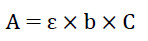
Since the path length was 1 cm, the concentration was obtained from:

The removal efficiency of MB was calculated using the following equation:

where C0 is the initial dye concentration and C represents the concentration at time t. The scientific calculator was used to verify the numerical outputs, perform direct calculations of the instantaneous concentration, and compute the removal percentage. Combining Excel-based graphical analysis with manual verification enhanced the reliability of the results.
For study of initial dye concentration effect on the degradation efficiency, the experiments are carried out via using different initial concentration (5, 15, 25) ppm at temperature (298.15 K), (pH= 7) and in presence (2 × 10⁻² M H2O2 + catalyst + 6W UVA), Fig. 7 illustrates that a higher initial dye concentration after 20 min results in a 99.92% percentage, whereas a concentration of 5 ppm MB after 20 min show 100% degradation. This process could explain that more dye molecules adsorb onto the catalyst surface when the dye’s initial concentration rises, which slows the oxidation process.
Fig. 8 shows that in the absence of H2O2, with the catalyst at temperature of 298.15K and pH = 7, the degradation of 5 ppm MB dye after 240 min is 99.98%, and for 25 ppm dye is 98.4%. This indicates that H2O2 is important for diluting the dye concentration but is less important at high MB concentrations.
The degradation of MB dye by Fenton is a first-order reaction. This is determined from the slope of the linear plot of the logarithmic remaining MB concentration versus treatment time t, as shown in the following Fig. 9.
CONCLUSION
Degradation of MB dye is conducted using Fe-attapulgite nanocomposite as the heterogeneous (photo-Fenton) catalyst in the presence of UV light and H2O2. Under optimal conditions [(pH=7), (2 × 10⁻² M H2O2), and (6W UV)], 100% degradation of MB dye can be achieved in 20 min. An integrated system combining a biological reactor and a photochemical reactor could use a Fe-attapulgite- coated catalyst to treat wastewater.
CONFLICT OF INTEREST
The authors declare that there is no conflict of interests regarding the publication of this manuscript.
