
Document Type : Research Paper
INTRODUCTION
Tetracycline hydrochloride remains one of the most widely prescribed broad-spectrum antibiotics, active against a wide range of Gram-positive and Gram-negative bacteria. Yet its clinical performance is only as good as its physicochemical behavior - crystallinity, particle morphology, solubility, and thermal stability all feed directly into bioavailability, shelf life, and therapeutic efficiency. It is not surprising, then, that researchers keep returning to the question of how solvents and preparation conditions reshape the structural properties of this compound [1,2].
Solvent systems play a major role in controlling crystal growth, particle aggregation, dissolution behavior, and molecular arrangement in pharmaceutical materials. Organic solvents such as methanol, ethanol, and propanol are commonly used in pharmaceutical processing because of their well-documented ability to modify crystal habit and influence intermolecular interactions [3,4]. In addition, water quality and structure have recently become important research topics, particularly with the increasing interest in magnetized water and its possible effects on chemical and biological systems [5].
Passing water through a magnetic field is reported to change its hydrogen-bonding pattern, viscosity, surface tension, and molecular clustering [6], and these shifts can in turn influence how pharmaceutical compounds dissolve and crystallize - affecting particle size, crystal structure, and thermal behavior. Magnetized water has already found its way into industrial, agricultural, and biological applications [7-9], but its effect on antibiotics specifically has barely been explored [10]. One notable exception is a recent parallel investigation into amikacin sulfate in magnetized water compared with organic solvents, which similarly reported enhanced solubility and solid-state transformation relative to conventional solvents [11]. The present study extends this line of enquiry to tetracycline hydrochloride, a structurally distinct antibiotic class, to determine whether comparable magnetization-induced benefits generalize across different antibiotic families. Beyond its mechanistic interest, this approach speaks to a broader shift in pharmaceutical processing toward greener, solvent-minimizing strategies [12-14]. If a simple physical treatment of water can reproduce - or even exceed - the crystallization benefits normally sought from organic solvents, it would offer a low-cost, chemical-free route to improving drug solubility and formulation stability without introducing residual organic solvents into the final product. Establishing whether this holds for a clinically important antibiotic such as tetracycline hydrochloride is the central motivation of the present work.
Therefore, the present study aims to investigate the effect of magnetized water and selected organic solvents on the physicochemical and thermal properties of tetracycline hydrochloride at different temperatures. The prepared samples were analyzed using scanning electron microscopy (SEM) to evaluate surface morphology, X-ray diffraction (XRD) to determine structural characteristics and crystallinity, and thermogravimetric/differential scanning calorimetric analysis (TGA/DSC) to assess thermal decomposition behavior and stability. The study provides a comparative evaluation of the influence of solvent type and temperature on the structural and thermal characteristics of tetracycline hydrochloride and highlights the potential role of magnetized water in pharmaceutical applications.
MATERIALS AND METHODS
Materials
Tetracycline Hydrochloride (purity ≥ 99%) was obtained from Hangzhou Hyper Chemicals Co., Ltd. (China) (CAS No.: 39831-55-5). Analytical-grade organic solvents including methanol (CH₃OH, ≥ 99.8%, CAS No.: 67-56-1), ethanol (C₂H₅OH, ≥ 99.8%, CAS No.: 64-17-5), and 1-propanol (C₃H₈O, ≥ 99.8%, CAS No.: 71-23-8) were purchased from BDH Chemicals Ltd. (England). The analytical and structural characterization protocols applied throughout this study build on approaches established in our group’s earlier work on the physicochemical characterization of structurally complex compounds [15].
Water Magnetization
To perform the experimental part of the present study, a magnetic system was constructed. It had a magnetic tube with a magnetic force of 12000 gauss (Delta company). Plastic tubes were connected to the magnetic tube to transfer water throughout the system. The plastic pipes ended in two small containers to store magnetized and normal water. In the experimental unit, water was allowed to flow into a 2-inch tube 85 cm long. Water flow rate was 5 L min-1. The whole system was constructed at the College of Science, University of Thi-Qar. A schematic of the constructed unit is illustrated in Fig. 1.
In parallel unpublished work from our group, the same distilled water and the same 12,000-Gauss magnetization system were characterized directly, with measurements taken before and after one, two, and three passes through the magnetic field. That work recorded a consistent shift with increasing exposure: pH rose from 7.8 to 8.2, electrical conductivity fell from 1642 to 1518 µS/cm, and surface tension decreased from 72.5 to 65.2 mN/m (unpublished data). These measurements characterize the same magnetized water used for the solubility experiments reported here, and they give direct empirical support to the hydrogen-bond reorganization mechanism proposed in Section 3.4, rather than leaving it as an untested hypothesis.
Solubility Measurements
The gravimetric method was utilized to measure the solubility. To do the measurement, an excess mass of Tetracycline Hydrochloride was added to a measured quantity of solvent. The cell (equilibrium cell) was then heated to a known constant temperature while continuously stirred. After 3 hours of heating, the temperature was documented. The prepared solution was kept cool for 2 hours. A sample of the cooled solution was filtered, and 2 mL of the filtrate was transferred to a weighed measuring vial (m0). After that, the vial was directly and tightly closed and weighed (m1) to calculate the weight of the sample (m1-m0). To evaporate the solvent, the vial was kept at room temperature. After the complete evaporation of the solvent, the used vial was reweighed (m2) to calculate the mass of the constant residual (m2-m0). The mole fraction (X) was computed from Eq. 1.
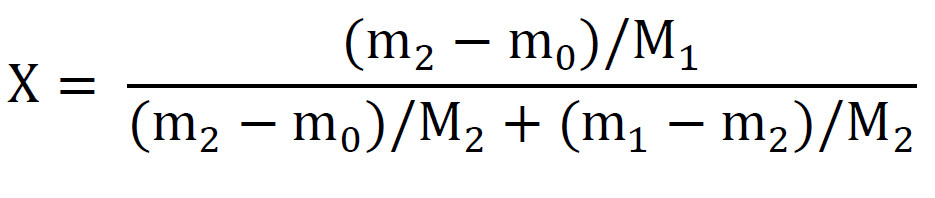
Where M1 represents the molar mass of the drug, while M2 is the molar mass of the selected solvent, respectively. For accuracy, the measurement was repeated 3 times.
RESULTS AND DISCUSSION
Scanning Electron Microscope (SEM) of Tetracycline Hydrochloride
SEM analysis of pure tetracycline hydrochloride revealed large agglomerated particles with sizes ranging from 166.1–210.8 nm, reflecting its crystalline nature and limited solubility. After dissolution in different solvents, noticeable changes in particle size and morphology were observed at both 25°C and 55°C, indicating a strong influence of solvent type on crystal formation and aggregation behavior.
Samples prepared in magnetized water exhibited the smallest and most homogeneous nanoparticles, with particle sizes ranging from 31.57–46.71 nm at 25°C and 37.76–55.42 nm at 55°C. The particles showed porous and compact nanostructures, suggesting enhanced crystallization and reduced agglomeration. This behavior may be attributed to the ability of magnetized water to reduce surface tension and improve molecular organization during crystal growth [16], resulting in enhanced solubility and potential bioavailability, consistent with the well-established link between reduced particle size and improved dissolution/absorption of poorly soluble drugs [17-19].
Distilled water, by comparison, produced larger and less uniform particles with some agglomeration - a middling result that falls well short of what magnetized water achieved.
The organic solvents each left their own signature on particle morphology. Methanol gave irregular crystalline aggregates, especially at 25°C, likely because it evaporates quickly and forces rapid recrystallization. Ethanol did better, producing more spherical and fairly uniform particles with signs of improved crystallinity. Propanol was the weakest performer, yielding large, irregular, aggregated particles - consistent with its lower efficiency as a crystallization solvent.
Taken together, the SEM data leave little doubt that both solvent choice and temperature shape the morphology, particle size, and crystallization behavior of tetracycline hydrochloride. Of all the media tested, magnetized water was the most effective at producing fine, homogeneous nanostructures [20].
X-Ray Analysis Diffraction of Tetracycline Hydrochloride
The XRD pattern of pure tetracycline hydrochloride exhibited sharp and intense diffraction peaks, confirming the high crystallinity and structural purity of the untreated compound. No additional or broad peaks were observed, indicating the absence of structural modifications in the original material.
After dissolution in different solvents at 25°C and 55°C, noticeable changes in diffraction intensity and peak broadening were observed, demonstrating the significant influence of solvent type and temperature on the crystal structure of tetracycline hydrochloride. Samples prepared in magnetized water showed reduced peak intensity with partially crystalline and semi-amorphous characteristics, suggesting that magnetized water affected molecular arrangement during crystallization and drying [21].
Methanol pushed things furthest toward disorder: peak intensity dropped markedly and the amorphous background grew, consistent with solvent-induced structural breakdown. Ethanol was gentler - several distinct peaks survived, so the material held onto more of its original order than the methanol-treated samples did. Propanol, meanwhile, gave broader, weaker peaks across the board, pointing to irregular crystallization and a generally less ordered structure [22].
In short, the XRD data show that both the solvent environment and temperature strongly affect the crystallinity and structural organization of tetracycline hydrochloride. Magnetized water and the organic solvents each pushed the crystalline-to-semi-amorphous transformation to different degrees, with magnetized water having the clearest effect on modifying crystal behavior and molecular organization.
Thermal Analysis of Tetracycline Hydrochloride
Pure tetracycline hydrochloride broke down in stages under heat: it first lost moisture, then its organic backbone degraded progressively, with the two major decomposition events falling at 195–241°C and 520–627°C - by which point the compound had essentially broken down completely.
The TGA/DSC results of samples prepared in different solvents at 25°C and 55°C demonstrated that both solvent type and temperature significantly affected the thermal stability and decomposition behavior of tetracycline hydrochloride. Samples dissolved in magnetized water exhibited slower and more gradual weight loss with clearer thermal transitions, indicating enhanced thermal stability and improved structural homogeneity compared with the other solvents. The reduced decomposition rate observed in magnetized water samples may be attributed to changes in hydrogen bonding and improved molecular organization during crystallization [23].
Distilled water was a weaker performer by comparison - more weight loss early on and lower overall stability, which fits with weaker molecular interactions and a less organized crystal structure. The organic solvents each behaved differently depending on their polarity and how readily they evaporated. Methanol and ethanol both showed multiple decomposition stages tied to solvent evaporation, structural rearrangement, and progressive breakdown of the tetracycline framework [24]. Ethanol held up somewhat better than methanol, but propanol was the worst of the three - irregular decomposition and heavy mass loss, again pointing to its weaker performance as a crystallization solvent [25].
Thermal analysis, in the end, tells a consistent story: magnetized water gave the most stable thermal behavior of all the media tested, while the organic solvents brought varying degrees of structural instability and faster decomposition. Solvent choice, it seems, is not a minor detail here - it directly shapes the thermal properties and decomposition kinetics of tetracycline hydrochloride.
Molecular Interaction Mechanism
What ultimately drives the physicochemical behavior of tetracycline hydrochloride is how strongly its molecules interact with whatever solvent surrounds them during dissolution and recrystallization. The drug has plenty to work with here - hydroxyl, carbonyl, amide, and dimethylamino groups all give it the means to form hydrogen bonds, ion–dipole interactions, and dipole–dipole interactions with polar solvents [2]. It’s these interactions, more than anything else, that decide how the crystal grows and what physicochemical properties the recrystallized material ends up with [3].
The SEM images make the case on their own: particle morphology shifted noticeably depending on which solvent was used for recrystallization, which points to the solvent tipping the balance between nucleation and growth. A solvent that stabilizes dissolved molecules well tends to favor the formation of many small nuclei rather than a few large crystals - which is exactly the smaller, more homogeneous particle pattern we saw [20].
The XRD data back this up. The drop in peak intensity, together with the slight peak broadening, tells us recrystallization loosened the crystal’s long-range order without pushing it all the way to amorphous - a pattern typically linked to solvent–solute interactions altering crystal growth kinetics [21,22].
TGA and DSC tell the same story. Since every sample has identical chemical composition, the differences in thermal stability can’t be about chemistry - they come down to how the crystals are packed. A more homogeneous arrangement spreads thermal energy more evenly through the lattice, leaving fewer of the localized defects that tend to kick off degradation [26].
Of all the solvents tested, magnetized water changed tetracycline hydrochloride’s physicochemical properties the most. We can’t yet pin down exactly why magnetic treatment affects water at the molecular level - that’s still an open question in the field - but our results fit the idea that it reorganizes water’s hydrogen-bond network, which then changes how it interacts with the dissolved drug during crystallization [16,10]. This is not purely speculative: as noted in Section 2.2, direct physicochemical measurements on the same magnetized water used in this study independently confirm the expected shifts in pH, electrical conductivity, and surface tension, giving the hydrogen-bond reorganization hypothesis a firmer empirical footing than the crystallization data alone could provide. So rather than pointing to one single cause, the differences we see are best read as the combined effect of several changes happening together during crystal formation.
Put the SEM, XRD, thermal, and solubility results side by side and the picture is clear: solvent choice steers the structural evolution of tetracycline hydrochloride by acting on intermolecular interactions, nucleation, growth, and packing all at once. It’s this whole chain of interconnected effects, not any single one of them, that ends up deciding the morphology, crystallinity, thermal stability, and dissolution behavior of the final recrystallized material.
Data Correlation of Drug Solubility
Apelblat Equation for Tetracycline Hydrochloride
The solubility data of tetracycline hydrochloride in the selected solvents were correlated using the modified Apelblat equation [27], which is widely applied for describing the temperature dependence of solubility in pure solvents (Eq. 2):

where X represents the mole fraction solubility of the drug, T is the absolute temperature (K), and A, B, and C are empirical constants obtained by least-squares regression analysis. The correlation coefficient (R2) was used to evaluate the fitting accuracy of the model.
Fig. 9 illustrates the variation in mole fraction solubility of the investigated drugs within the temperature range of 298.15–328.15 K. The calculated Apelblat parameters and corresponding R2 values are presented in Table 1, confirming the suitability of the model for describing the experimental solubility behavior in the studied solvent systems. Empirical constants calculated from Apelblat’s equation are illustrated in Table 1.
Van’t Hoff Equation
The temperature dependence of the equilibrium mole fraction solubility of the investigated drugs was evaluated using the Van’t Hoff equation [28], which describes the relationship between solubility and absolute temperature (Eq. 3):
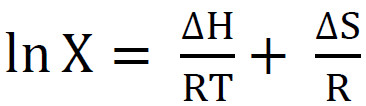
where X is the mole fraction solubility, T is the absolute temperature (K), ∆H and ∆ 𝑆 represent the dissolution enthalpy and entropy, respectively, and R is the universal gas constant (8.314 J mol−1K−1)
The calculated thermodynamic parameters and experimental solubility data for tetracycline hydrochloride in different solvents are presented in Table 2. Experimental and calculated values line up well, which supports using the Van’t Hoff model both to describe dissolution behavior and to help pick solvents during crystallization optimization.
Fig. 10 illustrates the Van’t Hoff plots of tetracycline hydrochloride over the temperature range of 298.15–328.15 K. The solubility order in the investigated solvents was found to be:
Magnetized water > Distilled water> \ Methanol> \ Ethanol > Propanol
Part of the explanation likely lies in viscosity: magnetic treatment brought it down from 1.32 to 1.05 cP. A drop of that size points to weakened hydrogen bonding and a partial breakup of water clusters under the magnetic field, both of which would make the water molecules more mobile and better able to interact with the dissolving solute [10].
The negative values of ΔH indicated that the dissolution processes were exothermic within the studied temperature range, while the positive values of ΔS suggested increased molecular disorder during dissolution. The combined thermodynamic behavior confirmed that the dissolution of tetracycline hydrochloride in all investigated solvents was predominantly entropy-driven and thermodynamically spontaneous [27].
Thermodynamic models
Mole Fraction Solubility of Tetracycline Hydrochloride
The experimental mole fraction solubility (X) of tetracycline hydrochloride in the different solvent systems over the temperature range of 298.15–328.15 K was calculated using Equation (3).
The variation in mole fraction solubility of tetracycline hydrochloride in different solvents within the temperature range of 298.15–328.15 K is presented in Table 3 and Fig. 11. The results demonstrated that the solubility of tetracycline hydrochloride increased progressively with increasing temperature in all investigated solvents.
Among the studied media, magnetized water and distilled water exhibited significantly higher solubility values compared with methanol, ethanol, and propanol. This behavior can be attributed to stronger solute–solvent interactions, which play a dominant role in the dissolution process. In general, the dissolution behavior is governed by the balance between solute–solute, solvent–solvent, and solute–solvent interactions, with higher solubility observed when solute–solvent interactions become more favorable [29].
The solubility order of tetracycline hydrochloride in the investigated solvents was as follows:
Magnetized water > Distilled water> \ Methanol> \ Ethanol > Propanol
Among the alcohols, solubility rose with solvent polarity, which tracks neatly with dielectric constant: magnetized water sits highest, followed by methanol, ethanol, and propanol in that order. The edge magnetized water holds here probably comes down to the same structural changes discussed above - the magnetic treatment appears to make the solvent more effective at dissolving tetracycline hydrochloride, not just more polar on paper [7]. This interpretation is consistent with established approaches to characterizing conductivity- and polarity-related behavior in polymer and solution-based systems, where structural and compositional changes have similarly been linked to measurable shifts in electrical and dielectric response [30,31].
Fig. 11 presents the relationship between the experimental and theoretically calculated solubility values of tetracycline hydrochloride in the investigated solvents over the studied temperature range. The theoretical solubility data were obtained using mathematical correlation models implemented through MATLAB analysis.
Solubility climbed steadily with temperature across the board, confirming that dissolution here is temperature-dependent and becomes thermodynamically more favorable as things heat up. That makes physical sense too: higher thermal energy means more molecular mobility and stronger solute–solvent interactions.
The experimental and calculated values tracked each other closely, which speaks well for the reliability of the mathematical model in describing tetracycline hydrochloride’s solubility across these solvent systems. Where the two sets of numbers did diverge slightly, this is most plausibly down to normal experimental limitations and to variation in intermolecular interactions across the different solvent media [27,29].
Advanced Thermodynamic Interpretation
The Van’t Hoff analysis gives us more than just numbers - together, enthalpy, entropy, and Gibbs free energy paint a fairly complete description of the energetic changes accompanying the dissolution of tetracycline hydrochloride in the investigated solvent systems. It makes more sense to read these three quantities together than separately, since they’re really just different windows onto the same molecular process. Gibbs free energy tells us whether dissolution is favorable overall; enthalpy captures the trade-off between the energy needed to break up the crystal lattice and the energy gained from forming new solvent–solute bonds. So what we’re measuring is really the net energetic outcome of dissolution, not any single step in isolation [27,32].
The entropy increase makes intuitive sense once you picture what’s happening: tetracycline hydrochloride molecules are leaving a rigid, highly ordered crystal lattice and moving into a solvated state where they’re free to tumble around, surrounded by solvent molecules that are themselves constantly shuffling. That gain in translational and rotational freedom is exactly what pushes the dissolution process toward being thermodynamically favorable [27].
This thermodynamic picture lines up neatly with what SEM and XRD already showed us. Smaller particles simply give the solvent more surface area to work with, and a less-ordered crystal puts up less resistance to molecules diffusing through it. In other words, the structural changes happening during recrystallization aren’t a side note to the dissolution behavior - they’re part of the same story, and the two need to be read together rather than treated as separate findings [26,20].
Zoom in to the molecular level and dissolution really comes down to a tug-of-war between two effects: breaking apart the interactions holding the crystal together, and forming new, stabilizing interactions between tetracycline hydrochloride and the solvent around it. Whenever the second effect outweighs the first, dissolution happens spontaneously - which is really all the Gibbs free energy value is telling us: the net balance between crystal lattice energy and solvation energy [27,32].
For magnetized water specifically, both the thermodynamics and the structural data point the same way: however the solvent is organizing itself at the molecular level, it seems to be tipping dissolution in a more favorable direction. We’re not claiming to have nailed down the exact mechanism - that’s still an open question - but the data we do have fit well with the idea that solvent organization shifts the balance between breaking up the crystal lattice and stabilizing the dissolved drug [16,10].
Taken as a whole, this thermodynamic analysis shows that dissolution of tetracycline hydrochloride is governed by more than solvent polarity alone - it reflects the combined contribution of intermolecular interactions, crystal packing, molecular organization, and solvation phenomena. This provides a mechanistically coherent picture that links the structural evidence from SEM and XRD, the thermal behavior from TGA/DSC, and the experimentally observed solubility trends into a single, internally consistent explanation.
CONCLUSION
This study set out to test whether magnetized water can rival or exceed conventional polar solvents as a crystallization medium for tetracycline hydrochloride, and the combined SEM, XRD, TGA/DSC, and solubility data give a consistent answer: it can. Magnetized water reproducibly produced the finest, most homogeneous particles, the most gradual and thermally stable decomposition profile, and the highest and most thermodynamically favorable solubility of all five media tested, with dissolution in every solvent shown to be spontaneous and entropy-driven by the modified Apelblat and Van’t Hoff models. Mechanistically, the results point to magnetic-field-induced changes in the hydrogen-bond network of water - lower viscosity, altered clustering, and a higher effective dielectric constant - as the most plausible explanation for these improvements, rather than any chemical modification of tetracycline hydrochloride itself.Beyond the specific case of tetracycline hydrochloride, these findings support a broader point: magnetized water, already validated as a low-cost, chemical-free treatment in agricultural and industrial settings, may offer a genuinely green alternative to organic solvents in pharmaceutical crystallization and formulation work. Confirming this potential for other poorly soluble antibiotics, and establishing how long the magnetization effect persists under real manufacturing conditions, are natural next steps for this line of research.
CONFLICT OF INTEREST
The authors declare that there is no conflict of interests regarding the publication of this manuscript.
