
Document Type : Research Paper
INTRODUCTION
Polyethylene glycol (PEG) is a linear polymer typically synthesized through a base-catalyzed polymerization of ethylene oxide, producing chains with repeating oxyethylene units. Its general formula is H(OCH₂CH₂)n OH, where n denotes the average number of ethylene oxide groups [1]. PEG is a synthetic polymer. It’s nontoxic, with a smooth creamy texture, nonionic surfactants, and water-soluble compounds that have multiple applications. PEG can be employed in the textile, pharmaceutical, cosmetic, and food industries. It can be used as an intermediate in the manufacture of laundry detergents, industrial cleaning products, and polyurethanes; as a solubilizer in enhanced oil recovery; as emulsifiers in pharmaceutical preparations; as additives in cosmetic creams and lotions; and as dispersing agents, wetting agents, and defoamers [1].
Polyvinyl alcohol (PVA) is a semi-crystalline or linear synthetic polymer that is creamy or white, tasteless, odourless, nontoxic, biocompatible, thermostable, granular, or powdered. It has incredible capabilities: optical properties, a high dielectric strength, and a substantial dielectric strength capacity to store charge. PVA is a readily available commercial substance [2].
Blend water-soluble polymers, like PVA/PEG, are lightweight, inexpensive, and have a variety of useful qualities, including mechanical, thermal, and optical qualities [3].
Recently, nanocomposites with improved properties have been prepared by mixing different polymers through the physical blending method. This is now a promising trend in the science
of nanocomposites [3]. Nickel oxide (NiO) is a green crystalline solid material with ferromagnetic properties and its Neel temperature is 523 K. NiO have unique electrical, magnetic, and optical properties that make it the main subject of a considerable number of scientific papers. NiO is a wide band gap (3.6– 4.0 eV) p-type semiconductor that experimented an extreme chemical stability. It became an interesting material of research due to its low cost and excellent ion storage property. For example, NiO nanostructures are p-type semiconductors with peculiar magnetic and electric behaviour depending on the particle size [4].
In this summery, Optical, thermal and conductivity properties will be investigated to enhance the polymeric matrix.
MATERIALS AND METHODS
Nickel nitrate (Ni (NO3)2.6H2O) and ammonium hydroxide solution (NH4OH) with a concentration of 25%. These materials were purchased from Sigma Aldrich without any additional purification processes. The chemical precipitation approach was used to generate nickel oxide nanoparticles (NiO)NPs.
Polyvinyl Alcohol (PVA) (C2H4O) n, with a molecular weight of 14 000 g/mol obtained from DBH Chemical LTD Pooled England.
Polyethylene glycol (PEG 4000, average molecular weight 3500–4500 g/mol) was purchased from CDH (India).
X-ray diffraction (XRD) patterns of nickel oxide nanoparticles (NiONPs) prior to the calcination procedure at temperature (800°C) were recorded at room temperature using Shimadzu diffractometer with (CuKα), a voltage of 40 kV, a current of 30 mA, and a wavelength of 1.5418 in the Bragg angle 2θ = 20°–80°. The FTIR spectrometer were obtained using Shimadzu IR Affinity-1 (Japan). Optical properties, including the transmittance and reflectance spectra were recorded for the pure and composite films using a Shimadzu UV-Visible 1800 double-beam spectrophotometer in the wavelength range of 100-1100 nm at room temperature (25 °C). Dielectric properties and electrical conductivity were measured as a function of frequency using an Agilent Impedance Analyzer 4294A. All measurements were carried out at room temperature (25°C).
Preparation of Samples
Preparation of Nickel Oxide Nanoparticles
The following steps were taken in order to synthesise (NiO)NPs using the chemical precipitation approach.
The molecular weight of (Ni (NO₃)₂.6H₂O) is (290.81) g/mole. Molar concentration (C=1) can be calculated using the following Eq. 1 [5]:
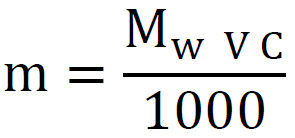
C: concentration in moles (mol/L).
m: weight (g). Mw: chemical mass (g/mol).
V: amount of purified water (ml)
To prepare a 1 M solution, 29.08 g of Ni (NO₃)₂·6H₂O was dissolved in 100 mL of distilled water. The mixture was stirred using a magnetic stirrer at 50 °C until a homogeneous solution was obtained. Then, a 25% ammonium hydroxide (NH₄OH) solution was added slowly, drop by drop, to the homogeneous nickel nitrate solution under continuous stirring until the pH reached 10. The mixture progressively transitioned to light green, resulting in the formation of a precipitate. The stirring was maintained for 3 hours to ensure complete precipitation of the nanoparticles.
The obtained precipitate was washed several times with distilled water to remove impurities and any residual reactants. The solid phase was then separated from the liquid either by centrifugation or filtration using filter paper. The collected precipitate was repeatedly washed with distilled water to ensure purity and remove residual salts.
After washing, the precipitate was dried in an oven at 200 °C for 6 hours to eliminate moisture and obtain a dry powder suitable for further processing. The dried material was then placed in a crucible and subjected to calcination at 800 °C for 4 hours to form nickel oxide nanoparticles. Finally, the calcined product was ground to obtain a fine NiO nanopowder.
Preparation of PVA/PEG/NiO Nanocomposites
A series of polyvinyl alcohol/polyethylene glycol (PVA/PEG) nanocomposites incorporated with nickel oxide nanoparticles (NiO NPs) were prepared using the solution casting technique.
Initially, a polymer blend solution was prepared by dissolving 0.035 g of PVA and 0.015 g of PEG in 30 mL of distilled water. The mixture was magnetically stirred at 50°C for 1 h until a homogeneous polymer solution was obtained. After complete dissolution, a specified amount of NiO nanoparticles was added to the polymer matrix. Different samples were prepared by varying the NiO content at 0.005 g, 0.015 g, 0.025 g, 0.035 g, and 0.045 g, respectively. For each composition, the mixture was mixed with a magnet for an extra hour to make sure that the nanoparticles were spread out evenly in the polymer matrix. After that, the dispersions were treated with ultrasonic waves in a water bath sonicator for about 15 minutes to make them more uniform and stop the nanoparticles from sticking together. After sonication, the prepared mixtures were poured carefully onto clean glass substrates and left to dry at room temperature for several days until complete evaporation of the solvent. The dried films were then peeled off from the substrates to obtain smooth and flexible PVA/PEG/NiO nanocomposite films with different nanoparticle loadings.
Theoretical Part
X-ray diffraction can be used to calculate the crystal size by using the Debye–Scherer diffraction Eq. 2, which relates the width of the diffraction peaks to the size of the crystals being analysed.
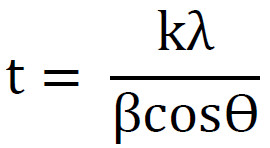
where k (shape factor) = 0.89 is for the NiO face-centered cubic structure [6], λ = 1.541 Å is the X-ray wavelength, β is the full width of the diffraction line at half of the maximum intensity measured in radians, and θ is the diffraction angle.
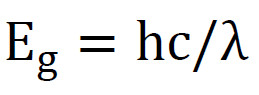
Optical energy gap (Eg) can be determined using the Eq. 3:
The absorption coefficient (α) is related to the energy of the incident photon as follows (Eq. 4):

Where α°:is a constant, Eu: represents the width of the tails of the localized states in the energy gap region (Urbach energy) [7].
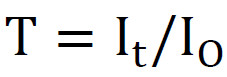
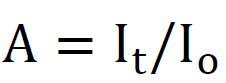
Transmittance is defined as the intensity ratio of transmitted radiation (It) to incident radiation (I₀) on a membrane and is computed using the Eq. 5:
Transmittance is related to absorbance (A) according to the Eq. 6:
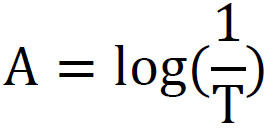
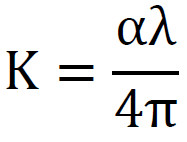
To measure absorbance, take the ratio of a film’s absorbed radiation intensity (IA) to the incident radiation intensity (I₀) on the film. Here is the equation that represents it (Eqs. 7-10):

RESULTS AND DISCUSSION
X-ray diffraction (XRD) technique
X-ray diffraction (XRD) technique was used to analyse the crystal structure of nickel oxide nanoparticles calcined at (800) °C. Fig. 1 show the diffraction pattern of a pure face-centered cubic (FCC) NiO phase, which is consistent with (JCPDS, No. 04-0835). The latter’s XRD spectrum usually shows peaks at 2θ = 37.4°, 43.4°, 63°, 75.7°, and 79.6° that correspond to the bulk NiO NPs (111), (200), (220), (311), and (222) crystal planes, respectively [8]. The measurements showed that the dimensions of the crystal were equal at a=b=c=4.176 Å, with the angles also equal at α=β=γ=90°.
The diffraction peaks exhibited increased sharpness and intensity with elevated calcination temperatures, especially at 800 °C, signifying improved crystallinity of the NiO nanoparticles [10]. The cubic structure was maintained at all temperatures [8]. The crystallite size was determined utilising the Scherrer equation (Eq. 3-1) for the (200) plane of NiO and the (011) plane of Ni(OH)₂. The average crystallite size increased from 13.06 nm before calcination to 14.95, 17.01, and 22.39 nm after calcination at 800 °C. This expansion is attributed to improved crystallisation and the reduction of grain boundaries, since thermal energy facilitates crystal formation. The increase in crystallite size is confirmed by the decrease in the full width at half maximum (FWHM) of the diffraction peaks [9].
Fourier-transform infrared spectroscopy (FTIR)
Fig. 2 shows the FTIR spectra of pure PVA/PEG blend and PVA/PEG/NiO nanocomposites with different NiO concentrations. The functional groups were identified and the potential interactions between the NiO nanoparticles and the PVA/PEG polymer composite were examined using Fourier Transform Infrared (FTIR) spectroscopy. The spectra were captured within the wavenumber range of 4000–400 cm⁻¹. The FTIR spectrum of the purified polymer blend reveals a broad absorption band in the 3200–3500 cm⁻¹ range, which is attributed to the stretching vibration of hydroxyl (O–H) groups and the strong intermolecular hydrogen bonding between PVA and PEG chains. The asymmetric stretching vibration of C–H groups in the polymer backbone is represented by the characteristic absorption band at 2920 cm⁻¹. The bending vibration of assimilated water molecules or the stretching vibration of carbonyl (C=O) groups are the causes of a noticeable band observed at 1650 cm⁻¹. Furthermore, the bending vibration of CH₂ groups is associated with the peaks located around 1420 cm⁻¹, whereas the C–O–C stretching vibration, a defining characteristic of PEG chains, is represented by the robust band observed in the 1090–1140 cm⁻¹ region [10].
The successful formation and dispersion of NiO nanoparticles within the polymer matrix are confirmed by the appearance of a new absorption band in the lower wavenumber region around 500–600 cm⁻¹, which is attributed to the stretching vibration of Ni–O bonds. This results from the incorporation of NiO nanoparticles into the PVA/PEG matrix. Additionally, as the NiO content increased, the intensity of certain characteristic peaks experienced subtle shifts and changes, suggesting that the nanoparticles and polymer chains interacted without significantly altering the primary chemical structure of the polymer composite [11].
Optical Characterizations
Fig. 3 illustrates a pure (PVA/PEG) composite with varying weight ratios of calcined nickel oxide nanoparticles (NiO NPs) at 800°C. The transmittance of the PVA/PEG combination was reduced by nickel oxide nanoparticles (NiO NPs).The decrease in transmittance became more pronounced as the ratios of NiO NPs nanoparticles increased. The transmittance of the models that have been constructed increases as the wavelength increases, and it nearly reaches a plateau at wavelengths exceeding 650 nm. The reference [12] is corroborated by the fact that an increased weight ratio of nanoparticles increases the density of the nanoparticles, which leads to a reduction in transmittance and a greater dispersal. The absorbency of the transmittance PVA/PEG composite was enhanced by the addition of NiO NPs nanoparticles. The absorbency demonstrated a substantial decrease as the wavelength of the incident light increased, ultimately stabilising at wavelengths exceeding 650 nm. This phenomenon is attributed to the absorption and scattering of incident light by nickel oxide nanoparticles in the PVA/PEG composite. These nanoparticles absorb a portion of the light and disperse the remaining portion [13,14].
The absorption coefficient (α) and optical band gap (Eg) of PVA/PEG-based nanocomposite films were evaluated using equations (3–2) and (3–7), as seen in Fig. 4. The absorption coefficient rises with increasing photon energy, indicating that optical transitions are more pronounced at elevated energies, whereas it diminishes at lower photon energies. Furthermore, the incorporation of NiO nanoparticles results in an increase in α, which can be ascribed to the improved interaction between the charge carriers and the incident photons in the nanocomposite system and the increased density of localized states [15,16].
The optical band gap of the blend PVA/PEG film was determined to be 4.99 eV. The addition of NiO nanoparticles resulted in a progressive decrease in Eg, which reached 4.88, 4.54, 4.43, and 3.99 eV for 3%, 5%, 7%, and 9% loadings, respectively, as shown in Table 1 [17,18]. The introduction of defect states and localised energy levels within the band structure is the primary cause of this reduction, as they enable electronic transitions at lower energies. Moreover, the band gap is further reduced by the formation of tail states, which is facilitated by structural disorder and interfacial interactions between the polymer matrix and NiO nanoparticles [19,20].
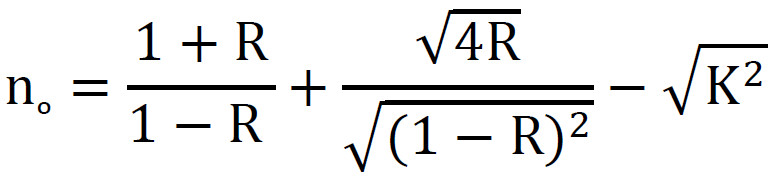
The refractive index (n₀) and extinction coefficient (k₀) of PVA/PEG nanocomposite films were determined using equations (3–8) and (3–9). As shown in Fig. 5, both n₀ and k₀ increase with increasing NiO nanoparticle content. The enhancement in the refractive index can be attributed to the increased polarizability of the system and the higher density of localized electronic states introduced by the NiO nanoparticles, which strengthen the interaction between the electromagnetic field and the material.
The increase in the extinction coefficient is directly associated with the rise in the absorption coefficient, reflecting greater attenuation of the incident light within the nanocomposite films [10,21–23].
According to the data presented in Fig. 6, the real and imaginary components of the dielectric constants change when the weight ratio of NiO NPs fluctuates in both pure and reinforced PVA/PEG composites. This change occurs as a function of the energy of the photon. With the addition of calcined nickel oxide nanoparticles (NiO NPs), the real and imaginary components of the dielectric constant are found to be increased, as demonstrated by the results. This increase can be due to the larger concentration of nanoparticles, which results in increased light absorption and scattering during the incident phase of the light spectrum.
Electrical Properties
Dielectric Constant (ɛ’)
Dielectric Constant (ε’) values were measured for films that were either pure (PVA/PEG) or reinforced with various weight ratios (wt%) of nickel oxide nanoparticles (NiONPs). At room temperature (25 °C), the films were calcined at 800°C, and measurements were made at frequencies ranging from 1 MHz to 5 MHz. The behaviour of the electrical insulation constant (ε’) as a function of frequency is shown in Fig. 7 for films reinforced with varying weight ratios of NiO NPs and pure PVA/PEG films.
The results indicated a reduction in the dielectric constant (ε›) values for all films, both pure and reinforced, with increasing frequency. The electric dipoles inside the molecular structure of the material orient themselves in accordance with the applied electric field at low frequencies. Nonetheless, the electric field undergoes rapid periodic reflections at elevated frequencies, and the applied electric field does not exhibit any further ion diffusion. This results in a decrease in the dielectric constant values [24]. The majority of polymeric materials have a declining dielectric constant as frequency increases [22]. The results indicate that the dielectric constant values for all produced PVA/PEG films at each frequency increased following the incorporation of nanoparticles (NiO NPs). As the proportion of the nanomaterial rose, the values of the Dielectric Constant correspondingly increased. The film (PVA/PEG-9% wt NiO NPs at 800°C) attained the highest Dielectric Constant, attributed to crystalline defects induced by the nanoparticles, resulting in multiple interfacial surfaces and an increase in the Dielectric Constant [25,26].
Dielectric Loss (tanδ)
Dielectric loss represents the proportion of energy dissipated within an insulating material relative to the total stored energy. It is directly associated with the energy consumed over the frequency range of 1 MHz–5 MHz at room temperature (25 °C). Fig. 8 presents the variation of the dissipation factor (tan δ) for pure poly (carboxymethyl cellulose–polyvinyl alcohol) (PVA/PEG) films and for films reinforced with different weight ratios of nickel oxide nanoparticles (NiO NPs) and subsequently calcined at 800 °C. The behaviour is shown as a function of frequency.
The Dielectric Loss (tanδ) exhibited a decrease across all pure and reinforced films as the frequency values increased. The observed phenomenon can be linked to the absorption of energy from polar dipoles within the structure of the prepared films. This absorption is necessary to counteract the hindrance imposed by the surrounding materials on the polar dipoles, which limits their mobility as frequency values rise, ultimately resulting in a decrease in the number of charge carriers. As a result, the Dielectric Loss (tanδ) decreases due to the increased energy required for polar dipoles to relax. At each frequency, the results indicate the values of the dissipation factor (tanδ) [27,28]. The addition of nickel oxide nanoparticles (NiO NPs) enhanced the thickness of all (PVA/PEG) films. The dissipation factor values increased in accordance with the nanomaterial ratio. The (PVA/PEG-9% wt at 800°C) film has the greatest dissipation factor. This increase is caused by a rise in the number of electrons in nanomaterials [29].
A.C Electrical Conductivity (σa.c)
To understand the structure-based polarisation and electrical conductivity process, the σ a.c values of the alternating current electrical conductivity were calculated for all films generated by increasing the applied electric field frequency from 1 MHz to 5 MHz at room temperature (25 °C). The σa.c., or alternating current electrical conductivity, varies with frequency for both pure (PVA/PEG) and films that have been calcined at 800 °C and supplemented with different weight ratios of nickel oxide nanoparticles (NiO NPs), as seen in Fig. 9.
For all produced films, pure or reinforced, the alternating current electrical conductivity (σa.c) values rose in tandem with the frequency values. This is due to the fact that when frequency values climb, the electrical polarisation of the generated films rises, causing 44 charge carriers to rapidly hop between adjacent layers. Generally, electrical conductivity increases with frequency in both polymer and semiconductor materials [28]. The results indicate that the incorporation of nickel oxide nanoparticles (NiONPs) enhanced the alternating current electrical conductivity (σa.c) values for all synthesised (PVA/PEG) composites across all frequencies [30]. The alternating current electrical conductivity values improved with the rising ratio of nanomaterials. The peak value of alternating current electrical conductivity was achieved by the PVA/PEG-9% wt film at 800°C. The incorporation of nickel oxide nanoparticles (NiONPs) increases the electron count, hence enhancing the electrical conductivity of alternating current.
CONCLUSION
In this study, PVA/PEG polymer blend films with a fixed composition (70% PVA-30% PEG) were successfully prepared using the solution casting method, both in their pure form and reinforced with NiO nanoparticles synthesized via a low-cost and non-toxic chemical deposition route. The XRD analysis confirmed the formation of crystalline NiO nanoparticles, with enhanced crystallinity and increased crystallite size observed at a calcination temperature of 800 °C, indicating this temperature as optimal for nanoparticle preparation.
The structural, optical, electrical, and thermal properties of the films were substantially impacted by the incorporation of NiO nanoparticles into the PAV–PEG polymer matrix. A systematic modification of the optical behaviour was induced by an increase in the weight fraction of nanoparticles, which was characterised by a decrease in transmittance and band gap energy, as well as an increase in absorption and reflectance. The formation of localised energy states and the enhanced interaction between the polymer chains and NiO nanoparticles are the reasons for these changes.
The optical band gap decreased gradually as the NiO content increased, indicating the efficacy of NiO nanoparticles in modifying the electronic structure of the polymer composite. Furthermore, the nanocomposite films’ enhanced polarisation and charge carrier interaction are evidenced by the improvement of refractive index, extinction coefficient, and dielectric parameters.
From an electrical standpoint, the AC conductivity increased with both nanoparticle concentration and applied frequency, signifying enhanced charge transfer attributed to the presence of NiO nanoparticles. The dielectric constant exhibited a significant influence on nanoparticle loading and frequency, indicating interfacial polarisation effects at the polymer–nanoparticle interfaces.
The results indicate that enhancing PVA/PEG polymer mix films with NiO nanoparticles effectively modifies their optoelectronic and dielectric characteristics.
These nanocomposite films exhibit promising potential for applications in optoelectronic devices, sensors, and energy-related materials.
ACKNOWLEDGEMENTS
The authors would like to thank Department of Physics, College of Science, University of Diyala,32001 Baqubah , Diyala -Iraq for its support in the present work.
CONFLICT OF INTEREST
The authors declare that there is no conflict of interests regarding the publication of this manuscript.
