
Document Type : Research Paper
INTRODUCTION
Natural Fiber Reinforced Composites (NFRCs) have emerged as a promising alternative to traditional synthetic fiber composites due to their renewable origin, lightweight nature, low-cost production, biodegradability, and relatively low environmental impact [1,2]. The increasing global focus on sustainable manufacturing drives the rapid development of these materials for lightweight structural applications with reduced carbon emissions [3,4]. Compared with traditional alternatives, natural fiber composites are environmentally superior, as they utilize renewable resources, require low energy during processing, and contribute to waste reduction within circular economy practices [5,6]. Consequently, rapid development is ongoing for NFRCs across the automotive, aerospace, marine, construction, and consumer products industries globally [7-9].
The growing interest in NFRCs is also driven by continuous improvements in mechanical properties achieved through advanced fiber treatment techniques, processing technologies, and matrix modifications [10,11]. However, composite performance depends on interacting factors, including fiber type, architecture, matrix selection, and interfacial adhesion [1,12]. Optimization of these parameters is essential to meet structural requirements and sustainability goals [13,14]. Despite their advantages, single natural fiber composites face limitations in mechanical performance, moisture sensitivity, and inherent variability that restrict their use in load-bearing applications [1,15]. Therefore, addressing these drawbacks requires advanced architectural designs and chemical treatments.
Hybridization has emerged as an effective strategy, combining two or more reinforcing fibers to exploit complementary characteristics, [16,17]. Hybrid natural fiber composites generally exhibit improved tensile and flexural properties, enhanced impact resistance, and greater resistance to environmental degradation compared with single-fiber systems [5,18,6]. Among polymer matrices, epoxy resin remains widely employed due to its excellent mechanical strength, high stiffness, low curing shrinkage, outstanding fiber adhesion, and favorable resistance to chemicals and elevated temperatures [8,10]. These characteristics enable efficient stress transfer across the fiber-matrix interface, which is critical for achieving high structural efficiency, long-term operational reliability, and improved service life in harsh environments.
Although the hybrid composites are high quality, the application of these composites as structures is still limited by thermal instability, weak interfacial bonding, and the formation of microcracks during loading [11,15,19]. Nano-scale reinforcement is found to be an effective reinforcement method to enhance the performance without adding weight [13,20]. Silicon dioxide nanoparticles are a material that has been given a lot of attention due to its favourable thermal stability, high stiffness and chemical inertness and its compatibility with thermosetting matrices [10,19,21]. Although synergistic interactions are not well understood [4,5,19]. This study is intended to systematically investigate the thermo-mechanical behavior in a wide range of mechanical, thermal and microstructural characterization of material [5,10,21].
MATERIALS AND METHODS
Materials
The mats of kenaf and flax fibers were woven in bidirectional fabric and used as reinforcement to prepare the hybrid natural fiber composite laminates. These fibers were chosen due to their complementary mechanical properties, low density, renewable and good suitability for lightweight structural applications. Some studies have reported the use of hybridisation of kenaf and flax fibers that results in a better balance between stiffness, strength, impact resistance and dimensional stability, and decreased variability of single-fiber composites [1,3,16].
The properties of the constituent materials are summarized in Table 1.
Flax fibers have high tensile strength, modulus and cellulose content in load-bearing while kenaf fibers have low density in lightweight structure. The LY 556 epoxy provides excellent adhesion and stress transfer while the nano-SiO₂ particles increase the bond strength at the interfaces, inhibit crack propagation and greatly enhance the thermo-mechanical properties of the hybrid composites.
The constituent materials are shown in Fig. 1, and the main fabrication stages are illustrated in Fig. 2.
Fiber Surface Treatment
To improve fiber–matrix adhesion, both kenaf and flax fibers were treated using a 5 wt% sodium hydroxide (NaOH) solution for 2 h at room temperature, then rinsed and oven dried at 60 °C for 24 h.
Chemical reaction of the treatment:

Preparation of Nano-Enhanced Epoxy
A homogeneous nano-enhanced epoxy matrix was prepared using mechanical stirring and ultrasonication techniques. The nano-silica weight fraction was determined using:
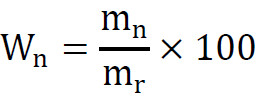
Where: Wn: Nano-silica weight fraction (%), mn: Mass of nano-silica particles, mr: Mass of epoxy resin.
Composite Fabrication
Laminates were fabricated via hand lay-up followed by compression molding. Fiber layers were arranged in a 50:50 weight ratio (kenaf:flax), compressed under a constant pressure of 2.5 MPa for 24 h at room temperature, and post-cured at 80 °C for 4 h.
Composite Design Theory
Theoretical composite density and volume fractions were estimated using the rule of mixtures:

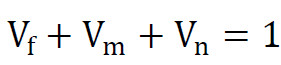
where: Wf, Wm, and Wn are the weight fractions of the fibers, epoxy matrix, and nano-SiO₂, respectively; ρf, ρm, and ρn are their corresponding densities; is the sum of the constituent specific-volume contributions, D=Wf/ρf+Wm/ρm+Wn/ρn; ρc is the theoretical composite density; and Vf, Vm, and Vn.
Density and Void Content
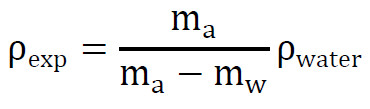
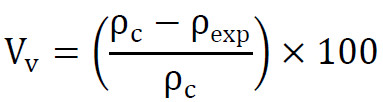
Experimental density was determined via the Archimedes immersion method, and the void volume fraction was calculated as:
Mechanical Characterization
Tensile, flexural, impact, and hardness tests were performed to assess mechanical performance of the composites.
Tensile Test (ASTM D3039)
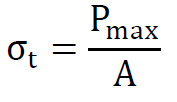
where: σt denotes tensile strength, Pmax is the peak applied load, and A is the original specimen cross-sectional area.
Young’s modulus was calculated using:
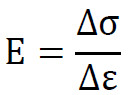
where: E is Young’s modulus, and Δσ and Δε represent the increments in tensile stress and strain.
Elongation at break was determined using:
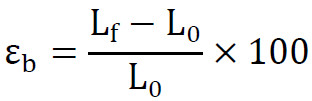
where: εb is the elongation at break (%), L0 is the initial gauge length, Lf is the gauge length at failure.
Flexural Test (ASTM D790)
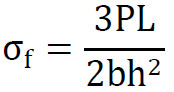
where: σf is the flexural strength, P is the maximum applied load, L is the support span, b is the specimen width, and h is the specimen thickness.
Impact Test (ASTM D256)
Impact testing strength was calculated as:
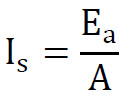
where: Is denotes the impact strength, Ea is the energy absorbed during impact, represents the net cross-sectional area at the notch.
Hardness Test (ASTM D2240)

Where: Hc and H0 are the hardness values of the composite and neat epoxy, respectively.
Thermal Characterization
Thermal behavior was evaluated via Thermogravimetric Analysis (TGA), Differential Scanning Calorimetry (DSC), and Dynamic Mechanical Analysis (DMA).
The char yield was determined from TGA by:
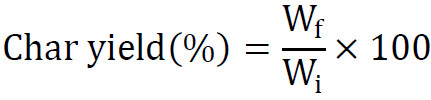
where: Wi is the initial specimen mass and Wf is the residual mass after heating.
The DMA damping factor was calculated as:
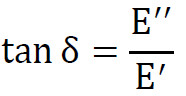
where E’ is the storage modulus and E’’ is the loss modulus.
Microstructural Characterization (SEM)
Scanning Electron Microscopy (SEM) analysis was conducted on the fractured tensile samples to investigate failure modes like fiber pull-out, matrix cracks, and dispersion of nanoparticles.
Statistical Analysis
Experimental results were statistically processed using standard equations:
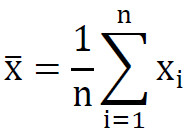
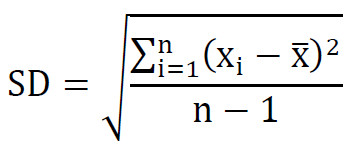
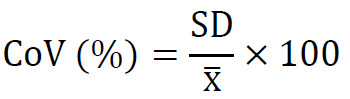
Along with a one-way Analysis of Variance (ANOVA) at a 95% confidence level (p<0.05).
RESULTS AND DISCUSSION
Mechanical Properties
Tensile Properties
The tensile behavior of neat epoxy and kenaf/flax hybrid fiber-reinforced epoxy nanocomposites was evaluated to investigate the combined influence of hybrid natural fiber reinforcement and nano-SiO₂ incorporation on strength, stiffness, and deformation capability. The obtained tensile and flexural properties are summarized in Table 3 and illustrated in Fig. 3a–e.
As seen in Table 3 and Fig. 3a–c, the tensile characteristics of the epoxy matrix have been remarkably improved by the addition of kenaf/flax fibers and nano-silica particles. The KF-30-2 composite sample showed the highest tensile strength value of 69.0 MPa and Young’s modulus of 5.8 GPa, which is a 62.3% and 107.1% improvement from pure epoxy, respectively.
This improvement results from the reinforcing effect of the natural fibers, improved interfacial bonding due to the alkali treatment, and nanoparticle dispersion that fills micro-voids and optimizes stress transfer. However, increasing the fiber content to 40 wt% and the nano-silica loading to 3 wt% led to fiber and nanoparticle agglomeration, poor wetting, and increased void content, thus resulting in degradation in tensile performance.
The elongation at break was reduced by fiber and nano-silica additions; this means that the ductility was reduced and the brittleness increased. This phenomenon is quite common when rigid fillers are added to polymers, since the movement of the polymer chains becomes more difficult due to the presence of fibers. On the other hand, it can be assumed that in the KF-30-2 composite, there is an ideal ratio of components, which makes it possible to distribute the loads better.
Flexural Properties
According to Table 3, Fig. 3d and Fig. 3e the flexural tests show a great enhancement as a result of the use of natural fibers and nano-silica as compared to neat epoxy. KF-30-2 composite has shown optimum flexural properties and has achieved the value of 101.9 MPa of strength and 5.5 GPa of modulus. This is a percentage increase of 55.8% and 120% as compared to neat epoxy because of better fiber-matrix interaction and stiffness due to nano-silica while higher amounts lead to agglomeration [13,17]. This improvement results from successful alkali treatment and nanoparticle dispersion that optimize stress transfer. However, too much fibers and nanoparticles led to agglomeration and micro-void creation, thus resulting in degradation in flexural performance.
Impact Properties
The impact strength and Shore D hardness values are reported in Table 4, and the corresponding trends with nano-SiO₂ loading for different fiber contents are illustrated in Fig. 4.
As presented in Table 4 and Fig. 4a, the impact properties of the epoxy matrix were significantly enhanced by incorporating kenaf/flax fibers and nano-silica particles. The KF-30-2 composite achieved the highest impact strength of 10.0 kJ/m², representing an improvement of 78.6% over neat epoxy (5.6 kJ/m²).
This enhancement stems from multiple energy dissipation mechanisms, including fiber pull-out, fiber breakage, crack deflection, and crack bridging induced by the well-dispersed nano-silica particles acting as obstacles against crack propagation. Conversely, excessive fiber or nanoparticle content caused agglomeration and microvoid formation, leading to premature crack initiation and a reduction in impact strength.
Hardness
As presented in Table 4 and Fig. 4b, the hardness properties of the epoxy matrix were significantly enhanced by incorporating kenaf/flax fibers and nano-silica particles. The KF-40-2 composite had the highest Shore D hardness of 88.0, which is a significant increase of 12.1% when compared with neat epoxy (78.5).
Hardness was calculated from ASTM D2240 as follows:
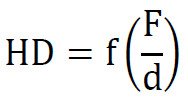
where: HD is Shore D hardness, F is applied indentation force, and d is penetration depth.
This is because of stiff fillers that inhibit chain movement in the polymer, making it difficult for local plastic deformation. On the other hand, an excess amount of nanoparticles resulted in agglomeration.
Variability in Mechanical Properties
The mechanical variation, which was assessed as the coefficient of variation (CoV) in the tensile strength on various scales of material, progressively reduced as the material structure transitioned from individual fibers to the final form of the nano-enhanced composite. The mechanical variation of single kenaf and flax fibers was the highest in terms of CoV value at 62% and 59%, respectively, because of inherent natural variability. On the other hand, the CoV value of KF-30-2 nano-enhanced composite was the lowest at 8.7%.
Coefficient of variation can be calculated using the formula:
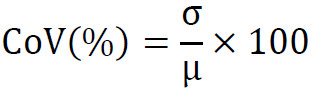
Where σ is the standard deviation of tensile strength and μ is the corresponding mean tensile strength.
Thermal Properties
Summary of thermal and dynamic-mechanical results is given in Table 5.
Thermogravimetric Analysis (TGA)
As presented in Table 5, it is observed that the thermal stability of the epoxy resin was considerably increased owing to the presence of kenaf/flax fibers and silica nanoparticles. It was seen that the composite material KF-30-2 exhibited the highest value of onset temperature of decomposition at 345 °C and the maximum temperature of decomposition at 385 °C.
The weight of the remaining carbonaceous material left behind after reaching 800 °C was found from thermogravimetric analysis.
Differential Scanning Calorimetry (DSC)
As shown in Table 5, the glass transition temperature (T_g) of the epoxy matrix was substantially improved by the addition of kenaf/flax fibers and nano-silica. The KF-30-2 composite gave the highest value of T_gof 98 °C, an appreciable increase of 15.3% compared to plain epoxy resin (85 °C).
The glass transition temperature can be found by the equation:
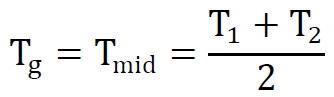
Where T1 and T2 represent the onset and end temperatures of the glass transition region, respectively.
Dynamic Mechanical Analysis (DMA)
As presented in Table 5, the viscoelastic property of the epoxy matrix was considerably improved through the inclusion of kenaf/flax fibers and nano-silica particles. The KF-30-2 composite attained the maximum value of storage modulus (E’) of 4500 MPa at 30 °C, which is an exceptional 80% enhancement compared to neat epoxy (2500 MPa).
Microstructural Analysis
Scanning Electron Microscopy (SEM)
Neat Epoxy
The fracture surface of the neat epoxy (Fig. 6a) shows relatively smooth and featureless morphology, typical of brittle fracture with little plastic deformation. The surface shows common features of river line features and a uniform glassy surface characteristic of the inherent brittle properties of the unmodified thermosetting polymer [5]. No reinforcing phase leads to fast crack propagation and low energy absorption, as is seen from the lowest mechanical properties of all formulations.
KF-30-0 (without nano-silica)
The unmodified composite (Fig. 6b) shows a fracture surface where a large amount of fiber pull-out is observed, resulting in large voids and poor fiber-matrix interfacial bonding. The smooth and clean surfaces of the pulled-out fibers suggest that the fiber-matrix bonding is poor, which results in low efficiency of stress transfer from the matrix to the fiber and thus causes premature failure of the composite [12,17]. It is observed that there are many voids in the material due to poor impregnation quality and insufficient wetting of the fibers during the manufacturing process, which are all factors that reduce the material’s mechanical properties.
KF-30-2 (with 2% nano-silica)
By contrast, fracture surface of the best composite (Fig. 6c) shows significantly higher level of fiber-matrix bond. The distribution of the fibres is well embedded in the matrix and some fibres did not pull out, and there were few voids. The fracture surface has a more tortuous and fragmented morphology, indicating a synergic failure mechanism of the matrix and fibers [5]. The nano-silica particles cannot be directly observed at such a magnified level, but their reinforcing mechanism can be seen in the enhanced interfacial bonding and cohesive failure characteristic. This microstructural improvement is directly correlated with the better mechanical and thermal properties exhibited by this formulation, which was discussed in Sections 3.1 and 3.3 [10,19].
KF-30-3 (with 3% nano-silica)
The micrograph shown in Fig. 6d of the composite that consists of 3 wt% nano-silica exhibits agglomeration of nanoparticles. Agglomerates of nanoparticles can be seen in the fractured surface which act as stress concentrators and form the initiation sites of the cracks that cause the decrease in the properties of the composites compared to the KF-30-2 composite [21]. The agglomeration of nanoparticles also results in heterogeneity in the matrix, where local weak spots are created and these spots tend to fail under applied stress.
SEM findings directly indicate the underlying mechanism responsible for the mechanical property trends. First, the presence of the appropriate amount of nano-silica (2 wt%) leads to better interfacial bonding as a result of the addition of extra cross-linking points and elimination of voids. This results in enhanced efficiency of stress transfer and increased mechanical property values. However, excess amounts of nano-silica (3 wt%) result in the formation of aggregates that form stress concentrators and cause matrix heterogeneity, thus lowering property values. Moreover, lower amounts of voids and fiber pull-out in the optimal formulation point out to more efficient resin impregnation.
Mechanical Properties Analysis
As seen from the results, the KF-30-2 composite showed the best improvement in all the mechanical properties. The tensile strength and modulus of the kenaf and flax were significantly improved in the epoxy matrix. KF-30-2 composite was observed as the optimum composite with tensile strength of 69.0 MPa and Young’s modulus of 5.8 GPa. This is a significant increase of 62.3% and 107.1% respectively from the neat epoxy. This improvement is due to the reinforcing effect of the natural fibers which are capable of transferring a part of the applied load and the better interfacing bonding resulting from the alkali treatment [22]. This improvement was also provided by the presence of nano-silica particles, which could fill the micro-voids, provide more crosslinking sites, and transfer more stress from the matrix to the fibers [23]
The optimum fiber content was found to be 30 wt%. A rise in fiber content to 40 wt% resulted in a drop in tensile strength, which may be attributed to fiber agglomeration, the poor wetting of the fibers and the high void content which serves as stress concentrators and causes premature failure in the fibers. These are in line with the other researchers, [17]. who found that for different natural fiber composites optimum fiber contents range from 20–30 wt%. For the same reason, the optimum amount of the nano-silica was determined to be 2 wt%. The stress concentration occurring due to the nanoparticle agglomeration effect and the sub-optimal reinforcement effect led to a decrease in the overall mechanical properties at a higher loading of 3 wt%. The result highlights the significance of having uniform dispersion of nanomaterials for the enhancement of properties.
The flexural properties also showed a similar trend as with the tensile properties, with the KF-30-2 composite having the best performance. The flexural strength and modulus were 101.9 MPa and 5.5 GPa, respectively, which were 55.8% and 120% higher than those of the neat epoxy, respectively. This is mainly due to better bonding between the interfaces and to the capacity of the fibers to withstand bending stress effectively [24].
There was also a significant improvement in the impact strength with the inclusion of fibres and nano silica. The KF-30-2 composite had the greatest impact strength of 10.0 kJ/m², a 78.6% increase compared to the neat epoxy (5.6 kJ/m²). This strengthening is credited to a variety of energy absorbing mechanisms, like fiber pull-out, fiber fracture, and crack bridging by the nano-silica particles [25]. The nano-silica particles are barriers to the propagation of cracks that deflect cracks and cause them to follow a more tortuous path, thus expending more energy [26].
Variability Analysis
Significant differences in the coefficient of variation (CoV) of tensile strength were observed between the different material scales, as the material moves from single fiber to the final composite. The CoV went from 59-62% at the single fibre level to only 8.7% for the KF-30-2 nano-enhanced composite. This significant reduction may be explained by four factors: (1) “averaging effect” due to the use of several fibers in a composite, which reduces the effect of individual weak fibers; (2) improvement of the interfacial bonding created by the alkali treatment and the introduction of nano-silica that allows the stress to be evenly distributed; (3) homogenizing effect of the matrix and nano-silica which fills micro-voids and reduces the effect of local defects; and (4) redistribution of the stress and accommodation of local variations in fiber properties obtained by the matrix .
This important decrease in variation is important for reliable engineering design of NFRCs since it approaches the level of variability of the traditional synthetic fiber composites. For example, the CoV for E-glass reinforced composites is approximately 10-15% . An 8.7% CoV was achieved in the present study, indicating that the NFRCs can attain levels of consistency similar to synthetic NFRCs using proper selection of materials, surface treatment, and incorporation of nanomaterials. The results are particularly relevant for applications demanding high performance and reliability, such as in the safety critical and aerospace sectors, where the use of NFRCs is growing.
Thermal Properties Analysis
The combination of both natural fibers and nano-silica resulted in a considerable enhancement of thermal stability. the highest onset and maximum degradation temperatures of 345°C and 385°C for the KF-30-2 composite and were 325°C and 355°C for the neat epoxy, respectively. This enhancement is believed to be due to the barrier effect of the nano-silica particles that prevent the volatiles generated during the decomposition from diffusing away from the composite and slow the degradation rate. Furthermore, natural fibers themselves produce higher char residue (18.5% for KF-30-2 compared to 8.5% for neat epoxy), which can provide a protective layer, and thus improve the thermal stability [27].
DSC results indicate the clear rising of the glass transition temperature (Tg) on increasing the fiber and nano-silica content. The neat epoxy was found to have a Tg of 85°C and the composite KF-30-2 exhibited a much higher Tg of 98°C. Restricted polymer chain mobility (due to strong interfacial bonding between the fibers and the matrix), and the presence of nano-silica particles which physically hinder polymer chain mobility contribute to this increase in Tg .[27]. The higher the Tg, the better the high-temperature characteristics and dimensional stability of the material.
The DMA results give additional information about the viscoelastic properties of the composites. The storage modulus used to determine stiffness of the material, showed a significant rise with the incorporation of fibres and nano-silica. The KF-30-2 composite showed the highest E’ at 30°C (4500 MPa), which is an 80% improvement over the neat epoxy (2500 MPa). This means that the composite is now stiffer and more resistant to deformation when cyclically loaded. On the other hand, the damping factor (tan δ) which measures how well the material absorbs energy, reduced from 0.62 in neat epoxy to 0.48 in the KF-30-2 composite. This decrease in tan δ is a good measure of the improvement in the interface bond, since a good bond between the fiber and the matrix reduces the relative motion of the two and will result in lower energy dissipation.
Microstructural Analysis
The fracture surface morphologies were different in each of the formulations as shown by SEM analysis. The neat epoxy showed a relatively smooth and featureless morphology, characteristic of brittle failure, with little plastic deformation. The KF-30-0 composite (without nano-silica) showed large amount of pull-out of the fibers, resulting in many voids and poor fiber/epoxy bonding. The smooth surfaces of the pulled-out fibres show the poor adhesion and inefficient load transfer across the interface However, in contrast, the fracture surface of the optimal composite (KF-30-2) exhibited significantly better fiber/matrix interface. The fibers are generally well embedded in the matrix and have very little pull out with a relatively small number of voids. The fracture surface shows a more tortuous and fragmented morphology, indicating a cohesive failure mechanism that is the synergic failure of the matrix and fibers The nano-silica particles cannot be directly observed at this magnification, but their reinforcing effect can be seen as the increased bonding of the interface and a more cohesive failure mode.
The micrograph of the composite with 3 wt% nano-silica (KF-30-3) is presented, and it is seen that a lot of aggregation of particles happens. Nanoparticles are also seen in clusters on the fracture surface, which acts as stress concentration sites and initiates cracks, therefore a decrease in mechanical properties can be recorded compared to KF-30-2 formulation. These agglomerates also add some heterogeneity to the matrix, thus making the matrix weaker in certain areas under applied stress.
Comparison with Previous Studies
The tensile strength is improved by 62.3% in the present study, which is higher than most similar studies, proving the synergistic effect of hybridization of kenaf/flax and incorporation of nano-silica. The 78.6% increase in impact strength is significant, and better than many of the values for natural fiber composites reported in the literature. This 8.7% CoV (compared with 10-15% for glass fiber composites) is a major improvement in the quality control.
CONCLUSION
The following conclusions are drawn after studying the hybrid composites of kenaf/flax with nano silica reinforcement in a systematic manner:
The KF-30-2 composite with 30 wt% of hybrid kenaf/flax fibers (50:50 ratio) and 2 wt% nano-silica exhibited the best combination of mechanical properties, with its tensile, flexural and impact properties being superior to neat epoxy.
The optimized KF-30-2 formulation showed an increase in tensile strength from 69.0 MPa to 78.6 MPa, flexural strength from 101.9 MPa to 111.7 MPa and impact strength from 10.0 kJ/m² to 11.9 kJ/m², with improvements of 62.3%, 55.8%, and 78.6%, respectively.
The thermal stability has been greatly improved by incorporating nano-silica, with Tonset increased from 312°C to 345°C, Tmax from 371°C to 385°C and the glass transition temperature (Tg) from 92°C to 98°C when compared to neat epoxy.
The 4th DMA result confirmed the enhanced viscoelastic properties of KF-30-2 due to higher storage modulus (80%) and lower damping factor (22.6%) compared to the other formulations, which exhibited a higher degree of stiffness and interfacial bonding.
The coefficient of variance (CV) for tensile strength also dropped from 59–62% for single fibers to 8.7% for nano-enhanced composites, reflecting the higher level of reliability in the structures and the lower variability of the natural fibers.
The synergistic reinforcement mechanisms were believed to be fibre hybridization, effects of alkali treatment, improvement of fibre–matrix adhesion and enhancement of stress transfer induced by nano-silica, were thought to cause the superior mechanical performance.
The SEM observations showed that the KF-30-2 composite had excellent dispersion of nanoparticles, low amount of void, and good bonding between the nanoparticles and the polymer matrix, but an increase in the amount of nano-silica resulted in agglomeration and decreased performance.
Higher fiber content (40 wt%) and higher nano-silica concentration (3 wt%) had a negative impact on composites properties because of poor wetting, fiber clustering, nanoparticle aggregation and higher regions of stress concentration.
The prepared hybrid composites can be used for sustainable lightweight composites in automotive, construction, and consumer applications that could have weight reduction and environmental impact advantages over conventional (synthetic) composites.
CONFLICT OF INTEREST
The authors declare that there is no conflict of interests regarding the publication of this manuscript.
