
Document Type : Research Paper
INTRODUCTION
Humidity is considered one of the important environmental parameters that requires continuous monitoring in many fields, such as maintaining household environments, food industry, medical industry, automotive industry, environmental systems, which has led to the development of humidity sensors with high performance [1-3]. Humidity sensors can be classified according to their operating mechanism into resistance, capacitive, impedance, voltage categories. Among them, resistance sensors are the most widely used because of simplicity of its design and ease of measurement [4-6]. Among the sensitive materials used in their fabrication are carbon –based materials conductive and nonconductive polymers, composites, 2D materials, and metal oxide semiconductors materials (MOS) such as ZnO, SnO2, and TiO2, which have attracted considerable attention due to their thermal and chemical stability, in addition to their distinctive surface properties [7-10].
Furthermore, TiO2 is considered a promising n-type semiconductor for humidity sensing because of the presence of oxygen vacancies and hydrophilic groups on its surface, which increases the adsorption and ionization of water molecules, thereby improving the sensor response. In order to control in the surface defects and increase the active sites in TiO2, this is considered an effective strategy for improving the performance of humidity sensors in terms of sensitivity, response speed and stability [11-13].
Additionally, to metal oxides, there are some polymers that are sensitive to humidity and have received great attention. Among the most prominent is poly (methyl methacrylate), which has been studied in a wide manner because of its good ability to form thin films, despite its excellent chemical stability and suitable insulating properties. The polar ester groups present in the structure of PMMA act to enhancement the interaction with water molecules, leading to changes in the electrical and insulating properties of the material when relative humidity changes. Therefore, PMMA is considered a promising material for use in humidity sensors, especially capacitive sensors based on composites [14-16].
Moreover, combining it with metal oxides can provide sensitive materials with enhanced performance as a result of the combination between the distinctive polymeric properties and the surface adsorption characteristics of metal oxides. Furthermore, numerous studies have shown that reinforcing PMMA with TiO2 particles improves its mechanical and physical properties, such as fracture toughness, hardness, and bending resistance, in addition to improving its functional performance, making PMMA/TiO2 one of the promising materials for the develop of humidity sensors with high stability and sensitivity. PMMA/TiO2 has been used in many applications, such as optical and electronic devices, self-cleaning coatings, medical materials and dental materials, solar cells, ultraviolet (UV)- resistant films and humidity and gas sensors [17-21].
These composites have been prepared using several techniques including in situ-polymerization, electrospinning, melt blending, sol-gel, dip coating, solution casting and spin coating [22,23]. Spin coating technique is considered one of the most common techniques for depositing thin films because of its low cost, the difficulty of its preparation steps, and the simplicity of its application [24,25]. This technique is carried out by placing the solution to be deposited onto substrate, and then spinning it at high speed, allowing the solution to spread uniformly due to the force of centrifugal, thereby depositing a homogeneous thin film. Furthermore, this technique provides precise control over the thickness of the film by adjusting several factors, including coating time, rotation speed, solution concentration, and its viscosity.it enables the deposition of smooth films that are homogeneous with a uniform distribution of nanoparticles, as well as the fabrication of films with multiple layers, making it an ideal technique for optoelectronic devices, solar cells, sensors, and other functional films applications [26-29].
Annealing is a thermal treatment process in which material is heated to a specific temperature, maintained at this temperature for an appropriate time period, and then cooled at a controlled rate [30-32]. This process is used to remove crystal defects and internal stresses, enhance the homogeneity of the material, and improve the microstructure and crystalline structure of the materials, thereby improving their mechanical, electrical, chemical and physical properties. Annealing is considered an essential step in thin films as well as nanomaterials because it decreases the defect density, improves the growth of the crystals, increases the degree of crystallinity, and improves the adhesion of the substrate film. It also contributes to improving the electrical and optical properties, which is directly reflected in the performance of electronic devices and sensors [33-36].
The aim of this study is to prepare a nanocomposite thin film of poly (methyl methacrylate) and titanium dioxide (PMMA/TiO2), and to investigate the effect of annealing on improving its structural, morphological, optical and sensing properties (humidity sensor). The study focuses on investigating the changes resulting from annealing in the structure of the film and its properties, thereby contributing to the development of a nanocomposite film with enhanced performance and the potential for use in advanced applications, particularly electronic devices and sensors.
MATERIALS AND METHODS
Materials and their purity
All materials used in this study (high purity PMMA solution and TiO2 with a purity of 99.9 %) were purchased by thermos fisher scientific, USA.
Samples preparation
The nanocomposite thin films (PMMA /TiO2) were prepared by mixing 100 ml of liquid PMMA with 0.8 g of TiO2 at a concentration of 0.1M using the following relationship:
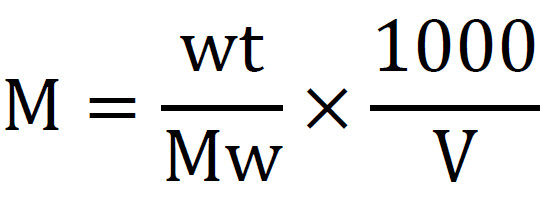
Where M is the molarity in unties of (mol L-1), Mw is the molecular weight in units (g mol-1), and it equals 79.9 g mol-1 for TiO2, wt. is the weight in (g) and V is the volume in units of ml.
The films were placed inside the water bath at a temperature of 70 oC with continuing stirring with the spatula for 1h. and after preparation and wishing the glass substrates with water and cleaning liquid, then wish them with deionized water and finally drying them via placing them in the oven at 50oC. after that the glass substrate was placed inside the spin coater device to deposit the films by putting several drops rotating it at speed 3000 PRM for 1min. Composite thin films of white color were obtained with a thickness of 100 nm, which was calculated using an Optical Interferometer equipped with a He-Ne laser of 632.8 nm. After completion from the deposition of samples, prepared films were annealed at 373K and 423 K for1h. The humidity sensor was prepared before and after annealing for samples of PMMA/TiO2 and deposited on glass substrate with dimensions of 1×1 cm2. The sample were provided with electrodes through the deposition of aluminum layer with a thickness of 2µm for sensor fabrication. The active length of the electrodes was 0.5 µm, whereas the distance between the electrodes was 5µm and active sensing area is (0.5 × 3.2) mm. the humidity sensing measurement of the sensor were carried out at an operation frequency of 10 KHZ via monitoring the changes of the both resistance and capacitance under variable levels of relative humidity (RH). The humidity control system was used to control the humidity inside the measurement chamber, while the actual humidity was monitored using a humidity meter.in contrast, the values of resistance and capacitance were recorded using a LCR Meter(ELC-3133A) to evaluate the performance of the sensor. Then the structural, morphological and optical characteristics of them were examined by X-ray diffractometer (Aeris Research Edition) (XRD), Field Emission Scanning Electron Microscopy (FESEM), atomic force microscope (AFM) and UV- visible spectroscopy, respectively. finally, the sensitivity characteristics of the prepares thin films were studied as a humidity sensor as a result of the effect of annealing on them.
RESULT AND DISCUSSION
Fig. 1 illustrates the pattern of X-ray diffraction of nanocomposite thin films of PMMA/TiO2, which are characterized by the appearance of a wide diffraction peak within the range of 2θ (10o-23o), this is attributed to the amorphous phase of the PMMA matrix, which is consistent with the finding reported in the previous studies, another diffraction peak also appeared at 2θ≃25o, corresponding to the (101) plane, indicating the semi-crystalline or crystalline nature of the thin film this agrees with [35].As result of annealing the films regular changes were observed in the characteristics of the main peak, leading to an increase in its intensity increased, while the full FWHM decreased. With increase in the annealing temperature (Ta) from 323K to 423K. This indicates an increase in the regularity of the crystalline structure and an improvement in the degree of crystallinity this is consistent with [37]. Moreover, the decrease in FWHM is associated with an increase in the crystal size according to Sherrer’s relation, reflecting a decrease in structural defects the growth of micro crystals as well as macrostrains within the film. A slight gradual shift in the position of the main peak was also observed from 2θ=25.3o to 2θ=24.8o with increasing annealing specifically, a shift toward smaller angles. this indicates a minor increase in the interplanar spacing of the crystal planes (d-spacing) according to Bragg’s law. This is attributed to the rearrangement of the polymer chains and the improved overlap between the PMMA matrix and the TiO2 particles under the effect of thermal annealing, thereby modification the crystal structure without the appearance of new phases. In general, the results of Fig. 2 and Table 1 confirm that annealing contributed to developing the crystal structure of the nanocomposite thin films through the following: increase in the intensity of the diffraction peaks, reduction in their FWHM, increase in the crystal size, accompanied by a slight in the position of the main peak. This reflects an enhancement in the regularity of the crystal structure of the films and is expected to be reflected positively on their physical and applied properties.
Fig. 2 displays the Field Emission Scanning Electron Microscope (FE-SEM) images of PMMA/TiO2 films prepared via the spin coating method before and after annealing. The images showed that the sample before annealing, as shown in Fig. 3a, has an irregular surface with the presence of some localized agglomerations of TiO2, as well as a relatively non-homogenous distribution inside the poly (methyl methacrylate).After annealing of the films at 373 and 423 K, as illustrated in Figs. 3b and 3c respectively, a gradual change was observed in the topography of the surface, represented by enhancement, the distribution of particles and their homogeneity, as well as an decrease in the surface agglomerations. In addition, a structure with more integration and more regularity between the components of the composite film was observed.
Furthermore, Fig. 3c of the film at the highest annealing temperature at 373 K, showed less defect and more homogeneity compared with the unannealed state. This indicates that thermal annealing contributes to improving the compatibility between titanium dioxide particles and poly (methyl methacrylate) matrix and also contributes to rearranging the surface structure of these thin films. These results are consistent with AFM examinations through the decrease in the surface roughness values and also the increase in degree of crystallinity and crystal size through the X-ray diffraction examination with increasing thermal annealing.
Fig. 3 shows the (2D) images and the statistical distribution of the nanoparticle diameters for the PMMA/TiO2 thin films prepared via the spin coating technique before and after annealing. It was observed that the (2D) images of all films exhibited a regular and homogeneous surface topography, with absence of obvious defects or large aggregates, which is evidence of quality of the deposition process and an improvement in the regularity of the surface morphology. The figure also shows that the particle diameter distribution following a pattern close to the Gaussian distribution, which reflects the homogeneity of nanoparticles growth and the stability of the deposition of nanocomposite thin films process.
In Fig. 4a, the majority of the particles were concentrated within the range of 10-20 nm, and the average diameter of the particles was 19.36 nm. Sample(4b) maintained the same statistical behavior, in addition to the appearance of an extension for the distribution toward larger diameters 36-38 nm, with an increase in the average diameter to 19.98 nm. Finally, in sample (4c), the peak of the distribution shifted to the range of 20-25 n, accompanied by an increase in the particles with the range of 40-50 nm, and the average particle diameter increased to 21.54 nm, indicating the growth of the particles with increasing annealing temperature. These result agree with the reduction observed in the values of roughness, root mean square and peak-to- peak, whose values are listed in Table 2 this agrees with [37].
They also correspond with these results with the X-ray diffraction results that showed an increase in crystal size with increasing annealing temperature, confirming that the thermal annealing enhances the growth of the crystals as well as improves the homogeneity and the regularity of the morphological structure of these nanocomposite films.
Fig. 4 shows the absorption spectrum of PMMA/TiO2 thin films prepared by the spin coating technique before and after annealing. A distinctive absorption peak was observed at approximately 330 nm, which is attributed to the electronic transition resulting from the components of the thin film, particularly the electronic transitions in TiO2 particles within the structure of PMMA/TiO2. In addition, a clear increase in the absorption spectral intensity was observed with increasing annealing temperature (Ta), indicating the occurrence of changes in the electronic structure of the film resulting from the effect of annealing. This behavior can be attributed to the generation of structural defects and the formation of additional energy levels inside the forbidden energy gap, in addition to the improvement of the interaction between the polymer matrix and oxide, as well as the rearrangement of polymer matrix, which leads to an improvement inside the energy gap and enhances the efficiency of the thin film in absorbing photons. Due to the absence of major change in the position of the absorption peak annealing, this indicates that the effect of thermal annealing is mainly concentrated on the enhancement of electronic density of states inside the composite film without changing the nature of the main electronic transition.
Fig. 5 shows the variation in the values of (Eg) with thermal annealing, where a gradual reduction was observed with increasing annealing temperature. As shown in Table 3, its values reduced from (2 to 1.61) eV this agrees with [35]. This reduction is attributed to an enhancement of localized state density inside Eg, which enhances the electronic transitions and reduces the required energy of charge carriers.
These results are consistent with the current previous structural and morphological examinations, where the XRD analysis showed an increase in the crystal size, and the AFM measurements also revealed an increase in the average diameter of the samples with increasing Ta. This demonstrates an enhancement in the arrangement of the internal structure and increases the efficiency of charge carrier movement, indicating a reduction in the value of energy gap as well as an improvement in the optical response. The result of Fig. 5 and Table 3 indicate that annealing is an efficient method for controlling PMMA/TiO2 thin films, as it contributed to modifying in microstructural and electronic structure with a reduction in energy gap. All of these effects enhance its applicability in electronic and optical applications.
Fig. 6 illustrates the humidity sensitivity characteristics of the sensor based on the PMMA/TiO2 thin film prepared via spin coating technique, curve (A) represents the adsorption and desorption curves of the sample before annealing, (B) and (C) represent the adsorption and desorption curve after annealing at 373 K and 423 K, respectively. (D) shows the sensitivity of all samples before and after annealing. Fig. 6 A-C demonstrate, for all samples, a gradual increase in capacitance with increasing relative humidity (RH). this behavior is attributed to the gradual. Adsorption of H2Omolecules present on the surface of the composite thin film and with its pores. At low humidity levels, the hydroxyl groups located on the surface of TiO2 particles and H2O molecules are adsorbed onto the active site of the sensor, forming an initial adsorption layer. Upon increase in humidity, multiply aqueous layers interconnected by hydrogen bonds are formed, resulting in an increase in the amount of adsorbed water in the sensitive layer.
The accumulation of these water layers leads to increase in the dielectric constant of water and consequently to an increase in the effective dielectric constant of thin film. in addition, the increase in polarization of the dipoles of H2O molecules in the presence of an alternating electric field is reflected as increase in capacitance in the high humidity state. Will lead to an increase in electrical response occurs as a result of the transfer protons through the adsorbed aqueous layers according to the Gortthuss proton hopping mechanism, ultimately resulting in an additional increase in the capacitance value. The result also indicate that annealing contributed to the improvement of sensor performance, as the annealed sample exhibited higher capacitance values than the unannealed sample. The highest response was recorded for the annealed film at the higher annealing temperature (Ta) at 423 K. this enhancement is attributed to the structural ordering induced via annealing within the PMMA/TiO2 thin film, including an increase in the density of active centers in the film and an improvement in the porosity, surface defects and surface roughness, thereby providing additional adsorption sites for water molecules and enhancing overall of the composite thin film polarization. Consequently, this is reflected in the increase in electrical capacitance within the investigated humidity range.The desorption curves exhibit slightly higher values than the adsorption curves at the same humidity, indicating the presence of a hysteresis phenomenon in the response of the humidity sensor. This behavior is attributed to the fact that some water molecules remain bonded to the (-OH) groups on the surface of TiO2 and are also trapped within the fine pores of the sensor, even during reduction in humidity. As a result, a portion of the adsorbed water remains inside the sensitive layer, leading to an increase in the measured capacitance during desorption. Moreover, the convergence between the adsorption and desorption curves leads to a decrease in the hysteresis degree as this reflects the ability for good reversibility and stability in sensor performance during repeated measurement cycles.
As show in Fig. 6D the sensitivity gradually increases with increasing RH for all samples. A noticeable improvement is observed after annealing, where the highest sensitivity was recorded for the sample annealing at 423K. this is attributed to an improvement of PMMA/TiO2 sample microstructure and an increase in active adsorption sites after annealing, which resulted in a higher water adsorption amount and enhanced the variation in capacitance with changes in humidity, ultimately leading to enhancement of sensor sensitivity.
Fig. 7 presents the adsorption and desorption curves of the resistance for the sensor based on the PMMA/TiO2 thin film before annealing and after it at (373 and 423) K, respectively. Fig. 7D represents the humidity sensor sensitivity curve before and after annealing. Figs. 7A-C show that the reduction in electrical resistance gradually with increase in the relative humidity level in all samples. In addition, this decrease becomes more pronounced with increasing Ta, where the sample annealed at 423 K exhibited the lowest resistance values within the investigated relative humidity range.As previously explained in the capacitance and humidity response, this behavior is attributed to the increase in the adsorption of H2O molecules on the sample structure and within its structure. Initially, H2O molecules bind to the hydroxyl function groups present on the surface of TiO2 particles as well as to the active sites within PMMA polymer chain. With increasing RH, consecutive adsorbed water layers interconnected via hydrogen bonds are formed, producing continuous pathways for charge transport. Therefore, at elevated humidity, the transfer of protons through these water layers becomes more efficiency according to Grotthuss mechanism. Consequently, the ionic conductivity of the composite the film increase, and thus the electrical resistance decreases significantly. It is also observed that annealing gradually improved the sensor efficiency. An increase in annealing temperature resulted in an improvement in the thin film response to humidity, while the resistance decreased to a greater extent compared with the unannealed sample. As previously discussed, this can be attributed to the modification of the microstructure of the thin film caused induced by annealing, which promoted the homogeneity in the distribution of TiO2 particles within the PMMA matrix. Consequently, this led to an increase in surface area and in the number of active sites for the adsorption of water molecules, in addition to the contribution in the diffusion of water vapor within the sensing layer.as a result, formation of a water network was more continuity, facilitating the transfer of protons and increasing the electrical conductivity. This was reflected in a decrease in the resistance and an improvement in the sensor sensitivity, particularly for the sample annealed at 423K. The result present in Fig. 7D is consistent with that of Fig. 6D, which demonstrates an increase in the sensitivity value with increasing humidity. The sample annealed at 423 K exhibited the highest for sensitivity value, confirming that annealing enhanced the ability of the composite thin film to adsorption of water molecules and facilitated the transport of charges, thereby resulting in an enhancement of sensor response of the humidity sensor.
CONCLUSION
This study successfully prepared PMMA/TiO2 nanocompsite thin film using the spin coating technique with a thickness of 100 nm, and subsequently investigated the effect of annealing at different temperatures of 373 and 423 K on its physical properties and its performance as a humidity sensor. The result revealed that annealing significantly improved the crystalline structure of the thin films, as evidenced by the increase in the X-ray diffraction peak intensity and reduction in (FWHM), indicating an increase in crystal size (D) and an improvement in the degree of crystallinity. This enhancement was directly reflected in the morphological structure, where TiO2 particles became more uniformly distributed within the PMMA matrix, accompanied by a reduction in surface roughness and RMS values, as well as an increase in surface homogeneity. This improvement was directly reflected in the morphological structure, where TiO2 furthermore, this structural improvement enhanced the optical properties, where absorbance increased while the energy gap decreased with increasing annealing temperature, suggesting easier charge carrier transport within the thin film. the combined improvement in the structural, morphological and optical properties was directly reflected in the sensing performance, where capacitance increased and resistance decreased with increasing relative humidity(RH). In addition, the adsorption and desorption curves exhibited low hysteresis, while the sensitivity gradually increased with increasing annealing temperature, reaching its optimum performance at an annealing temperature (Ta) at 423 K. Based on these findings, it can be concluded that annealing improves not only a single property but simultaneously modifies the internal, surface, and electronic structure of the PMMA/TiO2 film, which resulted in improvement the efficiency of the PMMA/TiO2 nanocomposite film as a humidity sensor, making it a promising material for environmental and electronic sensing application.
ACKNOWLEDGEMENTS
The authors would like to express their sincere gratitude and appreciation to the Department of Physics at the University of Wasit and the Department of Physics at the University of Baghdad for their valuable support in completing this research through the preparation and examination of the samples.
CONFLICT OF INTEREST
The authors declare that there is no conflict of interests regarding the publication of this manuscript.
